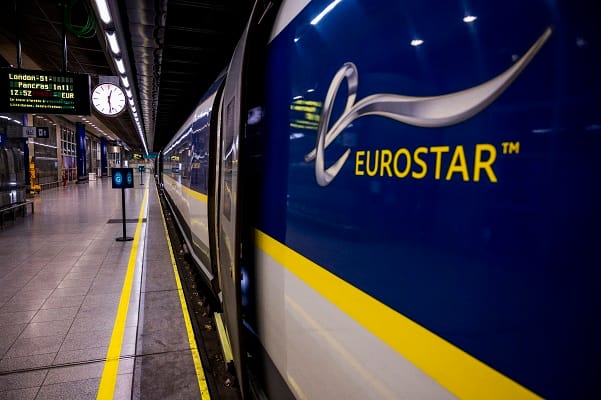
With Virgin Trains cleared to run services through the Channel Tunnel, London finally sees Eurostar’s 30-year monopoly cracked open. Competition is coming to the rails and passengers, not shareholders, will be the winners.
For the first time since the Channel Tunnel opened in 1994, Eurostar will no longer have the tracks to itself. The UK’s Office of Rail and Road (ORR) has approved Virgin Trains’ application to share the Temple Mills depot in east London, giving the company access to the only UK facility capable of servicing the larger continental trains. The decision unlocks an estimated £700 million in investment and could create 400 new jobs. Virgin aims to begin services from London St Pancras to Paris, Brussels and Amsterdam by 2030, with further plans to expand into Germany and Switzerland.
Sir Richard Branson called it “the right decision for consumers,” promising to “bring some Virgin magic to the cross-Channel route.” For London, it marks a rare and welcome moment of genuine market competition in a sector long dominated by a single player. It also signals the city’s renewed ambition to connect more efficiently with Europe after years of stalled expansion and steep ticket prices.
A market reawakened and why choice matters
When new players enter any market, standards rise and consumers benefit. It is the pressure of comparison that forces companies to improve. You would have seen this dynamic across energy, airlines and even broadband.
The same principle also applies when you explore the list of casinos on BestBettingSites.co.uk. There, you can compare more than 50 UKGC-licensed casinos side by side, each ranked by payout speed, customer service and game quality. The site applies consistent criteria across every review, assessing each operator on areas such as game variety, payout reliability and customer service to produce an impartial Top 10 list. It highlights both long-established names like Betfred and Ladbrokes and newer entrants such as Quickbet and MrQ, helping you see how each compares on substance rather than style. In much the same way, Virgin’s entry into the Channel Tunnel market reflects how fair competition encourages higher standards and greater choice.
Just as comparison sites raise expectations in digital markets, new players in transport can do the same. Eurostar’s long spell without rivals has kept fares high and options limited. Virgin’s arrival, and potentially others in the future, will return power to passengers, rewarding efficiency and exposing complacency.
Eurostar’s long ride alone
Eurostar’s monopoly has lasted more than three decades and, like many unchallenged enterprises, it has grown comfortable. Average returns to Paris for the coming weekend start at around £300, while flights can be found for less than half that price. More than 2,900 reviews illustrate just how far the current experience has slipped. On Trustpilot, Eurostar scores just 2.1 out of 5, a disappointing rating for what should be the jewel in Europe’s sustainable travel crown.
The strain is showing internally too. As Eurostar workers ballot for strike action, the RMT union has accused the company of neglecting staff safety and service reliability. Yet despite this turbulence, Eurostar remains hugely profitable.
The company carried 18.6 million passengers last year, a 22 percent rise on 2022, proving that demand for cross-Channel rail travel is only growing. That is exactly why the time for competition has come.
London’s role in opening up the tracks
London is at the centre of this shake-up. The Temple Mills depot in Leyton, now approved for shared use, is the beating heart of Britain’s international rail infrastructure. By allowing access to this site, the ORR has ensured that the city remains Europe’s gateway for both business and leisure travellers. Rail Minister Lord Hendy hailed the move as “a significant step forward,” one that will “drive innovation, lower fares and promote greener connections.”
This decision aligns neatly with London’s broader pro-competition agenda. The Competition and Markets Authority has long argued that open markets stimulate private investment and productivity growth, both of which are embedded in Virgin’s £700 million proposal. For the capital, the benefits are twofold: increased connectivity with Europe and a tangible boost to employment in east London.
What it means for passengers and for London’s future
Virgin’s approval is more than a headline about trains. It is a statement about London’s economic character: competitive, outward-looking and confident enough to welcome challengers. Passengers stand to gain lower fares, improved service quality and new destinations. Businesses benefit from stronger continental links and increased visitor spending.
While there is still some distance to travel before the first Virgin train rolls into Paris Gare du Nord, the precedent has been established: monopolies belong in the past. Whether you are choosing a route, a provider or a platform, London’s future will depend on open competition and on the belief that when consumers have options, everyone wins.
In the coming years, Virgin’s entry could also push for smarter ticketing, improved sustainability and new direct routes linking major UK cities to Europe. For London’s economy, it represents more than connectivity; it is a renewed vote of confidence in private investment and in the city’s role as Europe’s most open market.
Please play responsibly. For more information and advice visit https://www.begambleaware.org
Content is not intended for an audience under 18 years of age