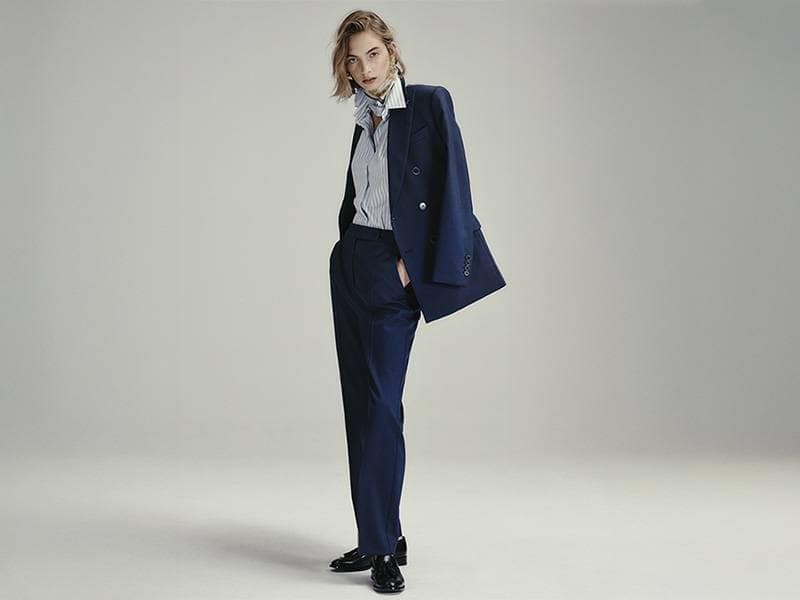
There are shifts in fashion that arrive without noise. They don’t demand attention, yet they gradually reshape the way people dress with surprising clarity. The renewed presence of women’s suits fits into this kind of quiet transformation. It isn’t about looking back or reviving old dress codes. It reflects a growing appetite for clarity, intention and proportion – qualities that feel increasingly valuable in a moment defined by constant visual stimulation.
What makes this shift compelling is its subtlety. There is no dramatic statement behind it, no trend cycle accelerating its return. The appeal of a well-made suit has surfaced again almost instinctively, as if many women had simultaneously recognised its ability to bring coherence to a look without sacrificing ease or individuality.
A renewed appreciation for clarity
The modern wardrobe has become a place of contrasts: casual pieces that prioritise ease, and elevated ones that add shape and definition. The suit sits at the intersection of these two worlds. It offers enough structure to give direction, while remaining fluid enough to feel relaxed. That clarity is one of the main reasons women are embracing tailoring again.
A blazer with a soft shoulder or a pair of gently widening trousers can restore a sense of order to even the simplest combination. This is not about formality; it is about feeling composed. In an era when fashion often leans towards excess or distraction, the simplicity of a suit feels refreshing, almost grounding.
Precision softened by comfort
What distinguishes women’s tailored suits from previous generations is the shift in construction and attitude. The rigidity once associated with tailoring has been replaced by fabrics that move, drape and adjust naturally. Wool blends with a subtle stretch, silk linings that feel weightless, and patterns cut to follow the body rather than hold it still.
These changes haven’t diluted the essence of tailoring. They’ve made it more accessible. Women are choosing suits because they no longer feel restrictive or formal. They carry an ease that works with the pace of contemporary life. The lines remain sharp, but the experience is softer, more intuitive.
An aesthetic that adapts without trying to impress
One of the understated strengths of modern tailoring is its ability to feel present without being dominating. A suit does not need embellishment or exaggerated shapes to communicate elegance. Its impact comes from proportion, cut and the confidence embedded in carefully considered design.
This is why women are turning back to suits: they offer a polished aesthetic that never feels forced. Whether worn with a fine-knit top and minimal jewellery or paired with a crisp shirt, the look appears intentional without being effortful.
Tailoring as a tool for expression
The renewed popularity of women’s suits does not represent a return to strict dress codes. If anything, it reflects the opposite. Today’s tailoring accommodates a wide spectrum of personalities and routines. Longline blazers for a sculptural silhouette, softly belted jackets that frame the waist, trousers that play with volume or fall cleanly with precision – each variation offers its own language.
This versatility allows women to express themselves through proportion rather than decoration. Some find strength in a streamlined profile; others prefer the relaxed character of a more fluid design. The suit becomes a canvas that supports identity instead of suppressing it.
A quiet return with lasting relevance
The resurgence of women’s suits is quiet, but it is far from fleeting. It reflects a desire for clothes that bring clarity to getting dressed – pieces that feel assured without being rigid, refined without unnecessary detail.
Women are choosing suits again because they offer something genuinely useful: a sense of order that never feels restrictive, a presence that doesn’t rely on volume or display. They provide a way of dressing that is considered, balanced and unmistakably modern – a reminder of how enduring well-designed tailoring can be.
A new expression of poise: the Max Mara philosophy of tailoring
Poise, in the Max Mara vocabulary, is not a matter of posture but of clarity. It is the quiet assurance that comes from wearing garments shaped with intention – pieces that support identity rather than impose an aesthetic. Since its foundation, the Maison has approached tailoring as a discipline rooted in proportion and thoughtful simplicity, reimagining classic forms to suit the pace and nuance of modern life.
The women Max Mara designs for interpret elegance as something lived, not performed. They seek refinement that feels grounded, adaptable and precise, silhouettes that bring together confidence and ease without sacrificing one for the other.
Their wardrobes reflect an understanding of balance: the need for garments that soften structure without losing definition and elevate everyday dressing without excess. Max Mara responds with a design language that blends discipline and fluidity, honouring the complexity of contemporary femininity.
This perspective is especially evident in the brand’s approach to tailored dressing. While outerwear remains a cornerstone of the Maison, its suits and tailored ensembles extend the same architectural sensibility into the realm of formalwear.
Within this world of precision, the Tailored Suit Project represents Max Mara’s highest expression of craft and clarity. Each jacket is built around an internal canvas and shaped from carefully selected fabrics through a sequence of hand-finished steps requiring over 345 minutes of work. The resulting silhouette bridges tradition and modernity: classic in its foundations, yet reinterpreted to honour the female form with subtle strength and unmistakable grace.
Through this thoughtful evolution of tailoring, Max Mara continues to define a contemporary vision of elegance – one guided by intention, authenticity and the belief that true sophistication emerges quietly, through garments created to endure.