Opinion by: Scott Stuart, founder at Kava Labs
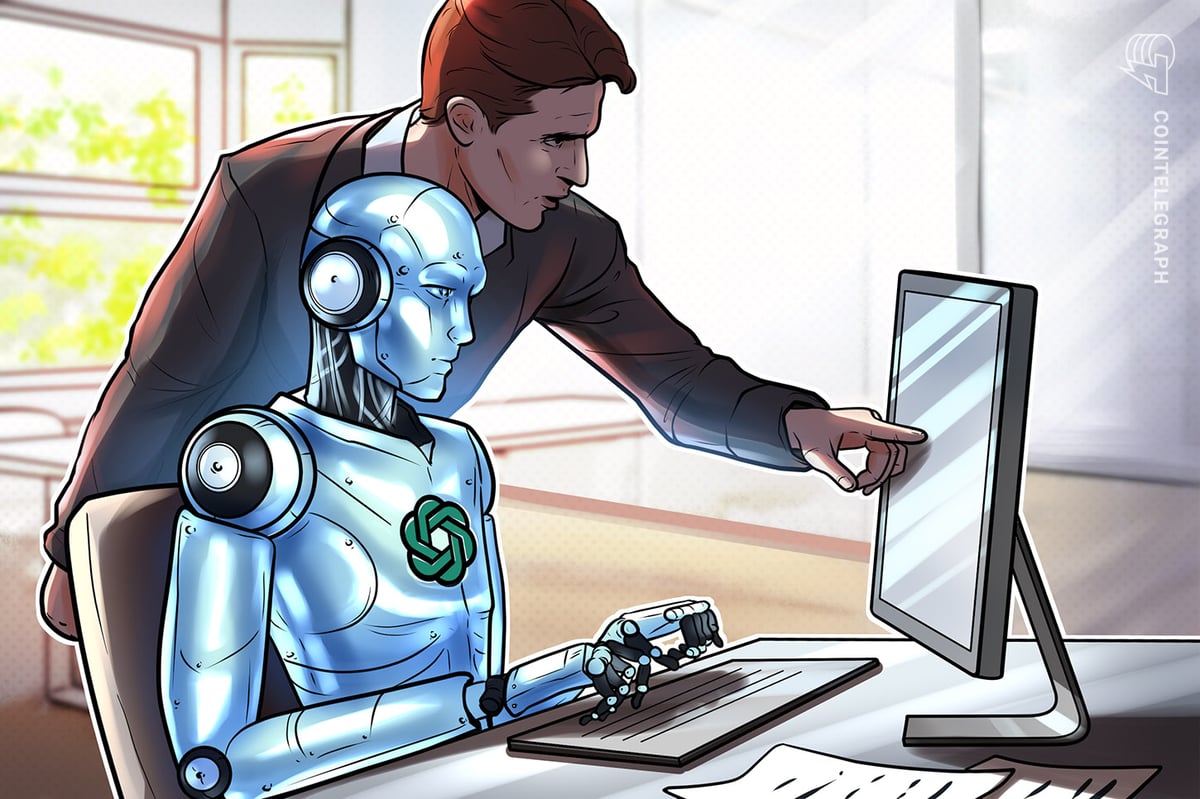
During November 2025, OpenAI executives floated the idea of a government partnership that sounded remarkably similar to a bailout. They walked it back after significant blowback. The trial balloon marked what everyone already knew but didn’t want to say out loud: AI’s biggest companies are already “too big to fail.”
In 2024, the US government proved the point. After a multiyear Google antitrust trial, the US government secured a liability ruling finding the company maintained an illegal monopoly, but remedies have yet to be finalized, highlighting how slow and uncertain antitrust enforcement can be.
No Chrome divestiture. No ad empire breakup. A company that spent 20 years cementing its monopoly walked away with a slap on the wrist.
The same thing is happening with AI now. This time, the technology is too fundamental to the economy to fix later.
The regret cycle is predictable
A new technology emerges. Multiple competitors race for dominance. Network effects and capital advantages create a clear winner. Everyone piles on because it’s rational. The best talent works there, the most capital flows there and the technology advances fastest there.
Ten years later, the horror sets in and it’s too late. Facebook weaponized attention and polarized democracies. Google created a surveillance advertising empire with control over web standards across billions of devices.
By the time the problem was recognized, the switching costs were insurmountable and legal remedies were toothless. AI is currently into its fourth year of this pattern. ChatGPT launched in November 2022. The “everyone piles on the winner” phase is already underway.
AI consolidation is even more dangerous
Social media monopolies were bad. They weaponized elections, destroyed mental health and created echo chambers. At least you could delete Facebook.
Browser monopolies were worse. Chrome’s dominance gave Google control over web standards, but at least you could switch to Firefox or Brave; the web itself remained decentralized. AI infrastructure is neither.
It’s not an app you can delete or a browsing experience you can replace. It’s the underlying layer for how knowledge work occurs, how code is written and how decisions are made. When email, spreadsheets, customer service, legal research and medical diagnosis all run through models controlled by two or three companies, the lock-in isn’t to an app. It is the infrastructure.
Demand for alternatives exists, but the window is closing
The counterargument to this is that people don’t actually want to be boxed in with privacy-first alternatives, proving the point. Brave has 100 million monthly users who chose a browser that doesn’t harvest their data. Signal has 100 million users who chose encrypted messaging over WhatsApp’s convenience. Linux runs 96% of the world’s servers because organizations want security over convenience. DuckDuckGo processes 3 billion search queries a month from people who have opted out of Google’s surveillance.
Decentralized AI has attracted hundreds of thousands of users despite having a zero marketing budget and offering less convenience compared to ChatGPT.
These aren’t zealots. They’re people who want the same capabilities without feeding proprietary data into models that also train their competitors.
The question to ask ourselves is whether supply can scale fast enough before the same network effects make alternatives irrelevant. Brave launched eight years after Chrome, and it took them nearly 10 years to reach 100 million users. Signal launched five years after WhatsApp and remains a fraction of WhatsApp’s 3 billion users. Both demonstrate that people do want options, and that clawing back market share can take decades once a monopoly has been established.
The stakes are permanent
OpenAI’s comments were a wake-up call, and must remind us that the difference between social media monopolies and AI monopolies is existential. Facebook manipulated newsfeeds; AI will mediate perception of reality. Google sold search history; AI will accurately predict decisions before they’re made.
Breaking up Facebook or Google was politically difficult. Breaking up an AGI monopoly will be technically impossible. Global AI infrastructure spending reached $1.5 trillion in 2025 and is projected to increase by another $500 billion next year, according to Gartner.
Related: 9 weirdest AI stories from 2025
All that capital is concentrated in three cloud providers and one chip manufacturer. Meanwhile, decentralized alternatives raised $436 million in 2024, a relatively small amount. The window to build parallel infrastructure is now, and not in five years when OpenAI has 4 billion users and enterprise contracts with every Fortune 500 company.
Readers will object that decentralized AI can’t match centralized performance, that coordination costs are too high and that the market has already chosen winners. That’s exactly what people said about Linux in 1998, Bitcoin in 2012 and encrypted messaging in 2015. The pattern is identical; alternatives seem impractical until they’re essential.
The Facebook mistake was bad. The Google mistake was worse. The AI mistake will be fatal. The only question is whether action happens before the narrowing window closes completely.
Opinion by: Scott Stuart, founder at Kava Labs.
This opinion article presents the contributor’s expert view and it may not reflect the views of Cointelegraph.com. This content has undergone editorial review to ensure clarity and relevance, Cointelegraph remains committed to transparent reporting and upholding the highest standards of journalism. Readers are encouraged to conduct their own research before taking any actions related to the company.
This opinion article presents the contributor’s expert view and it may not reflect the views of Cointelegraph.com. This content has undergone editorial review to ensure clarity and relevance, Cointelegraph remains committed to transparent reporting and upholding the highest standards of journalism. Readers are encouraged to conduct their own research before taking any actions related to the company.