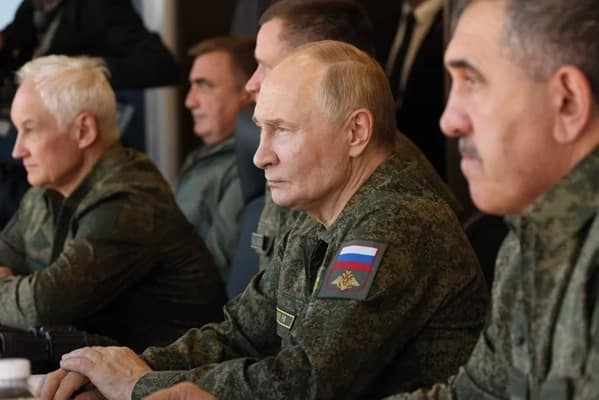
Russian intelligence services linked to President Vladimir Putin continue to operate in the UK using a blend of traditional espionage, cyber operations, influence campaigns and criminal proxies, according to British security officials and allied intelligence assessments.
While the Cold War image of spies swapping secrets in parks still exists at the margins, modern Russian espionage in Britain is broader, more adaptive and increasingly aggressive.
Three intelligence services, one strategy
Russia operates through three main intelligence bodies, each with distinct roles but a shared objective: weakening Western cohesion and advancing Moscow’s strategic interests.
-
GRU focuses on military intelligence, sabotage and covert action.
-
SVR handles classic espionage, recruitment of assets and political intelligence.
-
FSB oversees internal security but also runs overseas counter-intelligence and intimidation operations.
UK officials say these services increasingly operate in parallel rather than isolation, coordinating cyber, human intelligence and disinformation.
Diplomatic cover and expulsions
Traditionally, Russian spies in the UK operated under diplomatic cover, working from the embassy in London. Officers would pose as diplomats, trade officials or cultural attachés while running intelligence networks.
That model has been severely disrupted since the 2018 Salisbury nerve-agent attack on former Russian spy Sergei Skripal, after which the UK expelled dozens of suspected intelligence officers. Further mass expulsions followed Russia’s invasion of Ukraine.
As a result, intelligence officials say Moscow has shifted tactics.
Non-official cover and criminal proxies
With fewer diplomats available, Russian intelligence increasingly relies on non-official cover—agents posing as businesspeople, journalists, researchers, or students.
Another growing trend is the use of criminal intermediaries. These proxies are tasked with surveillance, logistics, cyber-crime, money laundering and intimidation, allowing Russian services to maintain plausible deniability.
Security sources say such networks are harder to detect because they blur the line between organised crime and state espionage.
Cyber warfare and digital espionage
Cyber operations are now central to Russian intelligence activity in the UK.
Targets include:
Russian hackers linked to state agencies have been accused of stealing sensitive data, probing critical systems and conducting reconnaissance for potential future attacks.
British officials say cyber espionage is often paired with influence operations, using stolen or manipulated information to undermine trust in democratic institutions.
Disinformation and influence campaigns
Another key front is information warfare.
Russian-linked networks amplify divisive narratives online, particularly around:
These campaigns rarely promote Russia directly. Instead, they aim to deepen existing social fractures, weaken public confidence and reduce support for UK foreign policy.
Intelligence officials stress that most of this activity exploits open platforms rather than secret channels, making it difficult to police without infringing free speech.
Targeting exiles and dissidents
The UK remains home to Russian dissidents, journalists and defectors, some of whom are under active surveillance.
The Salisbury attack highlighted the extreme end of this threat, but officials say intimidation, harassment and monitoring are far more common than assassination attempts.
British security services believe the threat to individuals critical of the Kremlin remains “persistent and real”.
UK response and counter-intelligence
UK counter-espionage efforts are led by MI5, working alongside MI6 and allied agencies.
Recent measures include:
-
Expanded powers under the National Security Act
-
Increased monitoring of foreign influence operations
-
Closer coordination with Five Eyes partners
-
Stronger scrutiny of financial flows linked to hostile states
Officials say the aim is not just arrests, but disruption—forcing Russian intelligence to constantly rebuild networks.
A long-term confrontation
British officials caution that Russian espionage is not a temporary spike driven by the Ukraine war, but part of a long-term strategic confrontation.
Russia views the UK as a high-value target due to its intelligence capabilities, military support for Ukraine and influence within NATO.
As one senior security source put it: “This is not about spies in trench coats. It’s about persistent pressure across every domain—physical, digital and psychological.”