
Nationwide’s April House Price Index has just been published revealing that the annual rate of house price growth slowed to 3.4% in April, from 3.9% in March.
According to the data, the average price of a residential property dropped by 0.6% month-on-month.
|
*Seasonally adjusted figure (note that monthly % changes are revised when seasonal adjustment factors are re-estimated)
Robert Gardner, Nationwide’s chief economist, said: “April saw a slowing in UK house price growth to 3.4%, from 3.9% in March. House prices fell by 0.6% month on month, after taking account of seasonal effects.
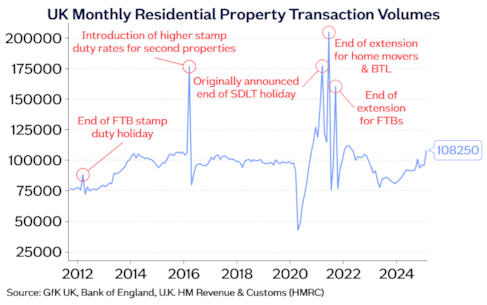
“The softening in house price growth was to be expected, given the changes to stamp duty at the start of the month. Early indications suggest there was a significant jump in transactions in March, with buyers bringing forward their purchases to avoid additional tax obligations.
“The market is likely to remain a little soft in the coming months, following the pattern typically observed following the end of stamp duty holidays. Nevertheless, activity is likely to pick up steadily as summer progresses, despite wider economic uncertainties in the global economy, since underlying conditions for potential home buyers in the UK remain supportive.
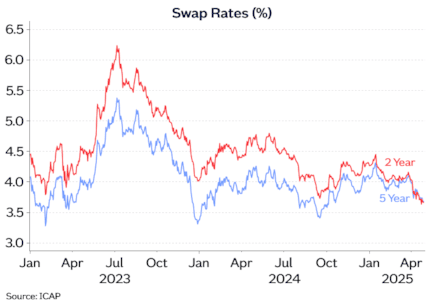
“Unemployment remains low, earnings are rising at a healthy pace in real terms (i.e. after accounting for inflation), household balance sheets are strong and borrowing costs are likely to moderate a little if Bank Rate is lowered further in the coming quarters as we and most other analysts expect. Indeed, swap rates (which underpin fixed rate mortgage pricing) have moderated in recent weeks.”
Industry reaction:
Amy Reynolds, head of sales at Antony Roberts, said: “The end of the stamp duty concession in March removed some of the urgency from the market. Some buyers accelerated purchases to beat the deadline but others simply dropped back into ‘wait and see’ mode, hoping that, with inflation now largely under control, the Bank of England might cut interest rates next month.
“The possibility of lower mortgage rates is keeping many buyers cautious, especially first-time buyers and mortgaged movers.
“We are finding that the London property market is caught between a rock and a hard place – sellers’ price expectations, particularly in prime and popular areas, are still unrealistic compared to the offers buyers are willing to make. While there are committed buyers out there, they are highly price-sensitive, and many are no longer prepared to ‘overpay’ just because stock levels are historically low.
“Best-in-class properties are still attracting strong competition and, in some cases, achieving excellent prices. Buyers continue to pay a premium for properties that are priced sensibly, presented well, and located in prime areas. The message is clear: those who price according to today’s market, rather than yesterday’s headlines, are finding success.”
Matt Thompson, head of sales at Chestertons, said: “A lot of property sales that would have happened in April were finalised in March instead as buyers were driven to beat the changes to Stamp Duty thresholds. In comparison, house hunters who entered the market in April were in less of a rush with some even pausing their search amid the Easter holidays. Sellers, on the other hand, remained motivated and we have seen a clear uplift in homeowners listing their property for sale in April year on year. We therefore expect market activity and particularly buyer demand to pick up in early May which will lead to a busier than usual summer market.”
Nathan Emerson, CEO of Propertymark, commented: “Despite economic uncertainty globally, it is encouraging to see house prices remain resilient month on month. This provides many aspiring home movers with a perfect opportunity to investigate the marketplace more robustly and potentially better negotiate their next steps on the property ladder.
“The housing market remains one of the many backbones of the UK economy, but with average house prices across the UK typically sitting at around seven times the average annual gross salary, the UK Government and devolved administrations need to make fulfilling their housing targets a priority to help even out long-standing demand versus supply issues.”