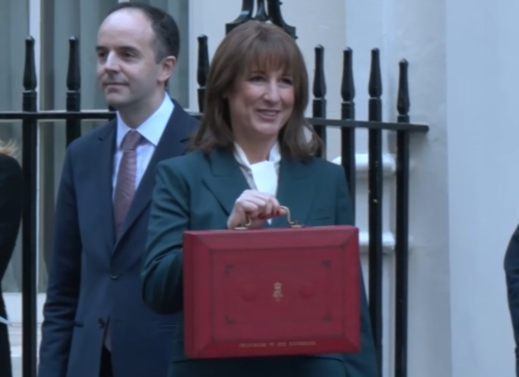
Chancellor Rachel Reeves will set out an update on the UK economy when she delivers the Spring Statement next week.
The statement, scheduled for 3 March, will be published alongside updated forecasts covering growth, inflation, unemployment, public spending and tax receipts for the coming years. While not a full Budget, the Spring Statement can shape future decisions on taxation and government spending.
No major policy changes are expected. However, property industry figures have renewed calls for measures affecting the housing market to be considered.
Peter Graham, partner and head of real estate and construction for the North at RSM UK, commented: “There’s a clear appetite for tax reforms to help stimulate the real estate market and relieve a substantial pressure point for the sector. Our [internally conducted] report found a third [33%] of respondents believe scrapping stamp duty would improve the viability of developments. While abolition is unlikely, a reintroduction of reliefs for first-time buyers and multiple dwellings would be a welcome step towards easing the tax burdens and supporting the sector’s long-term growth.
“Economic volatility, heightened tax restrictions and business rates are key barriers to investment in the sector, making government support crucial. Reforms such as increasing business rates relief for vacant properties would go a long way to alleviating financial pressures and promoting future investment.
“We are also yet to see the consultation for zero rated VAT for social housing come to fruition after this was announced in the Autumn Budget. This would be a welcome move which would improve the viability of social housing developments.
“The upcoming Spring Statement provides an opportunity for the government to provide much needed clarity and support for real estate development, improving overall transaction viability and boosting market activity.”
Meanwhile, Lee Williams, national sales manager at Saffron for Intermediaries, has identified three areas where targeted action could support confidence in the housing market. His full comments are below.
He said: “With many reports ahead of the Spring Statement suggesting it may deliver very little in the way of new policy and focus largely on economic forecasts rather than substantive reform, there is an even greater need for measures that genuinely support confidence in the housing market. In my view, there are three areas where practical action could have real impact.
“Commit to effective and reliable planning reform: Planning reform must deliver tangible improvement. Delays and inconsistency have eroded trust, and when applicants cannot rely on timely decisions, they hesitate to commit capital. The decline in planning applications from last year reflects that uncertainty, denting the Government’s ambition to deliver 1.5 million new homes in this term.
“The Spring Statement is an opportunity to reinforce accountability and introduce clearer, more predictable timeframes. Greater certainty would encourage developers and investors to proceed, supporting much-needed housing supply.
“Drive regeneration through flexible change-of-use measures: Town centres continue to struggle with vacant and underused buildings that restrict growth. A more flexible and proactive approach to change-of-use could unlock investment and accelerate regeneration.
“Converting redundant commercial space into residential or mixed-use developments would revitalise high streets while increasing housing delivery. Practical planning support for town centre renewal would attract capital and strengthen local economies.
“Strengthen housing supply by investing in skills and apprenticeships: Labour shortages remain a clear constraint on housebuilding, directly affecting the pace of delivery. Greater emphasis is needed on promoting trades and vocational qualifications as strong career routes, rather than university being seen as the default option. Developers require greater practical and financial support to scale operations, invest in training and manage rising costs at a time when many businesses are calling out for additional help. Without rebuilding workforce capacity and strengthening support for those delivering homes on the ground, housing supply ambitions will remain difficult to achieve.”