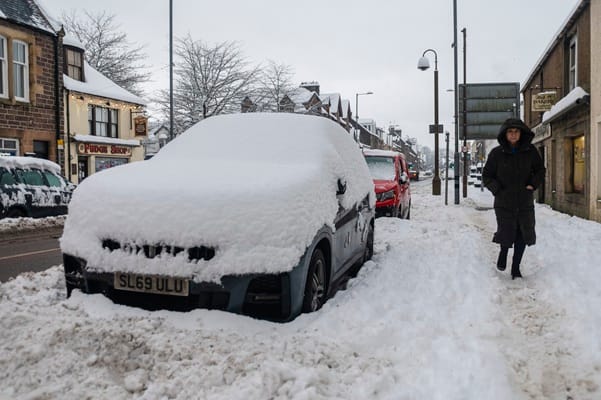
As snow and ice warnings remain in place across the UK, motorists are being warned about the risks of drowsiness while driving in cold weather.
Experts are warning drivers about how using the car’s heating system can contribute to fatigue on the roads as drivers try to cope with winter climates.
Car insurance experts at Tiger.co.uk urge drivers to maintain a well-regulated temperature inside the vehicle, or else risk breaking The Highway Code.
Driving with the heater on for an extended period can raise body temperature and reduce oxygen levels inside the car, causing fatigue and creating a false sense of comfort, which reduces reaction times and concentration levels.
While there isn’t a specific offence for drowsy driving in The Highway Code, this can be considered careless or dangerous driving, potentially resulting in an unlimited fine and three to 11 penalty points.
Police cannot test a driver for fatigue like they can with drug or alcohol related offences, meaning incidents are likely under reported. In fact, it is estimated that between 10% and 20% of all road crashes worldwide are fatigue-related.
Driving while drowsy can impair reflexes and decision-making just as much as driving under the influence of alcohol, making it equally as dangerous.
Drowsy driving combined with other winter dangers like icy roads and darker days can also significantly increase the likelihood of serious accidents, which is why it’s crucial for motorists to be mindful of the temperature and ventilation inside the cabin.
Drivers are urged to keep the car at a moderate temperature, ideally between 19°C and 22°C, and use the ventilation system to circulate fresh air rather than relying on air recirculation, which can quickly make the car stuffy.
It’s also important to take regular breaks to stretch and get some fresh air during longer journeys.
Ian Wilson, Managing Director and car insurance expert at Tiger.co.uk said: “In winter, many of us blast on the heating as soon as we get into the car to help combat the chill, but too much heat, especially with the air recirculating, can make you feel drowsy far quicker than you realise.
“It might feel cosy, but that warm, still air can reduce oxygen levels and slow your reflexes, which is dangerous behind the wheel.
“Keeping the temperature balanced, cracking a window for ventilation, and taking breaks on longer journeys are simple ways to help stay alert and safe this winter.”