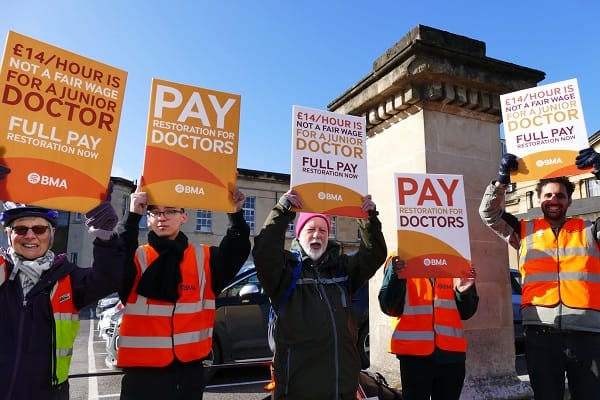
Resident doctors in England have voted to continue to strike for an additional six months as the row over pay and jobs continues.
Around 93% of the British Medical Association (BMA) doctors voted in favour to strike during a new ballot.
The BMA wrote on X, “An overwhelming 93.4 per cent of resident doctors in England have voted for further strike action, giving a clear mandate to continue pressuring the Government on jobs and pay in 2026.
“The overall turnout was 52.54 per cent. Stay tuned for updates on our next steps.”
Dr Jack Fletcher, chairman of the BMA’s resident doctors committee, said on Monday afternoon, “None of this needs to mean more strikes.
“In recent weeks the Government has shown an improved approach in tone compared with the name-calling we saw late last year.
“A deal is there to be done: a new jobs package and an offer raising pay fairly over several years can be worked out through good will on both sides, in the interests of patients, staff and the whole NHS.”
A Department for Health and Social Care spokesman said, “On top of a 28.9% pay rise over the last three years, this government is continuing to work with the BMA to address the issues resident doctors face in their careers, including fast-tracking legislation to prioritise home grown medical graduates for specialty training places.
“The government has been in intensive and constructive discussions with the BMA Resident Doctors Committee since the start of the new year to try and bring an end to the damaging cycle of strikes and avoid further unnecessary disruption for patients and NHS staff.
“We hope that these talks result in an agreement that works for everyone, so that there is not any more strike action by resident doctors in 2026.”
Matthew Taylor, interim chief executive of the NHS Confederation and NHS Providers said, “NHS leaders will be bitterly disappointed that resident doctors have voted to continue with industrial action, especially given the huge impact that strikes have had on patients and the health service’s performance and finances.
“Further strikes will pile yet more unplanned costs on NHS organisations, forcing health leaders to make difficult choices over reducing staff and patient services to try to balance their books.
“The government and NHS are already working hard to improve the working lives of resident doctors, including introducing the Medical Training (Prioritisation) Bill. Health leaders would urge resident doctors to reflect on the impact of further industrial action on patients, the difficult financial backdrop we’re operating in, and the generous pay rise that has already been offered to them by the government before staging more walkouts.
“We cannot let these strikes roll through 2026, using up yet more scarce resources and impeding the progress the NHS needs to make in reducing waiting lists. Health leaders need to see the government and BMA resume talks – through mediation if needed – to find a long-term solution to this dispute.”