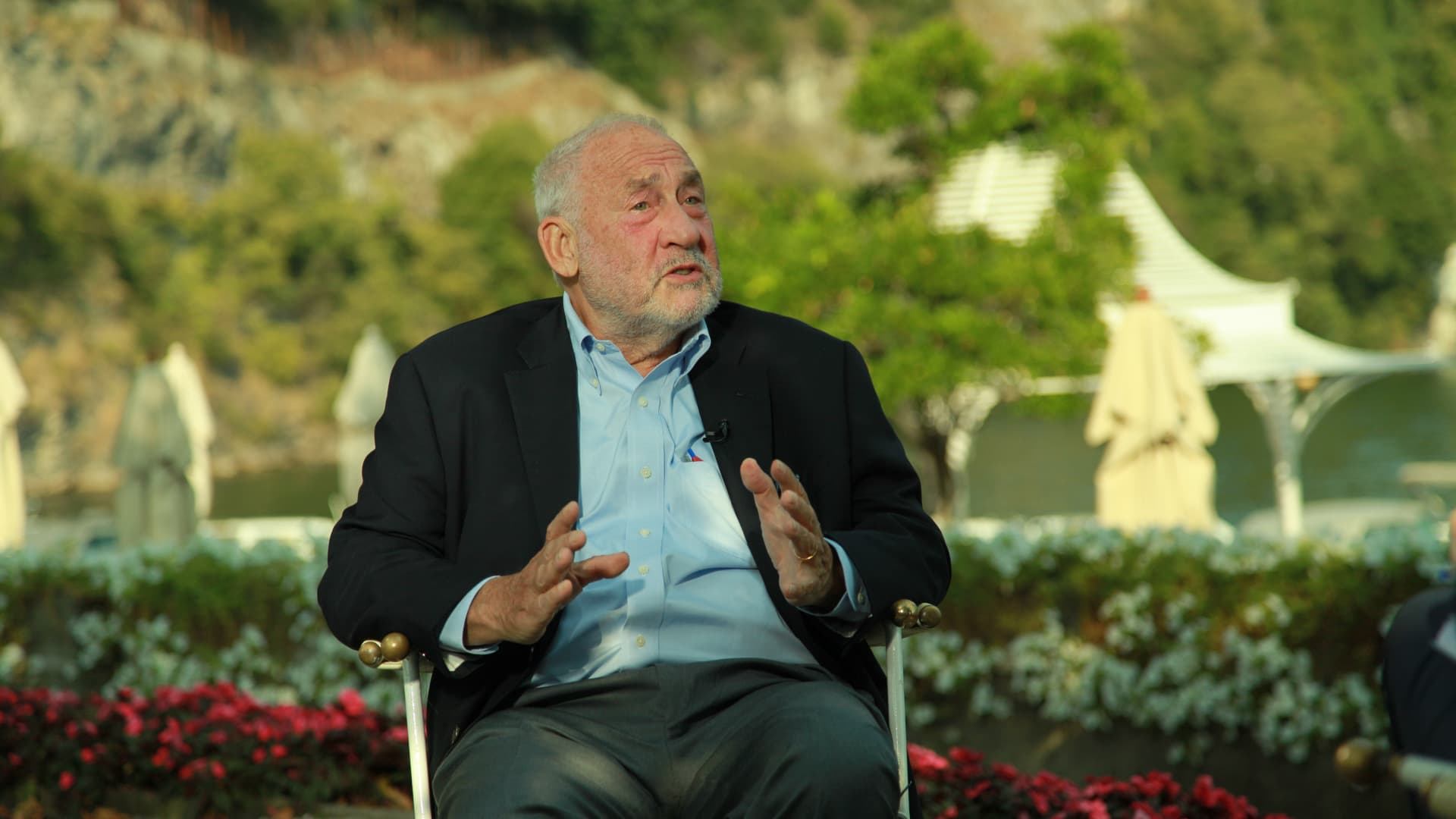
The Federal Reserve “didn’t do their homework” and mischaracterized the spike in inflation that has plagued the U.S. economy over the last two years, according to Nobel Prize-winning economist Joseph Stiglitz.
U.S. inflation started to gain pace in early 2021 as the economy emerged from the Covid-19 pandemic, rising from an annual 1.2% in December 2020 to a 40-year high of 9.1% in June 2022.
The Fed didn’t start hiking rates until March 2022 and Chair Jerome Powell repeatedly insisted that inflation was “transitory,” indicating that it could be easily tamed.
“The Fed thought the source of the inflation that began in the post-pandemic era was excess demand, and you could understand why they may have thought that if they didn’t do their homework,” Stiglitz told CNBC’s Steve Sedgwick on the sidelines of the Ambrosetti Forum on Thursday night.
Instead, Stiglitz said that the price rises were often driven by other factors, such as a shortage of key components like semiconductor chips.
In an effort to drag inflation back down towards its 2% target, the Fed has now hiked interest rates 11 times in total to a target range of 5.25%-5.5%, the highest level for more than 22 years.
Considerable progress has been made, with the 12-month headline consumer price index reading falling to just 3.2% on the year in July, and multiple data points suggesting that inflationary pressures have eased considerably.
‘Bad economics’
Although he does not see the aggressive monetary policy tightening of the last 18 months tipping the U.S. economy into recession, Stiglitz suggested there are lessons to be learned from the Fed’s assessment of inflationary dynamics.
“It’s really bad economics, because [the Fed] saw that the government had passed this enormous recovery program, and if all that money had been spent, it would have been inflationary, but you have to remember back just a few years ago, there was an enormous amount of uncertainty.”
This uncertainty meant that firms were not investing as they ordinarily would have, while consumers did not feel comfortable deploying the pent-up savings accrued during the pandemic — meaning total, or aggregate, demand was still below pre-pandemic forecasts, Stiglitz said.
“Why was there inflation? We all know the reason,” he added. “Car prices in the beginning went way up — why? Was it because we didn’t know how to make cars? No, we knew how to make cars. American auto companies forgot to put in orders for chips, and for want of a chip, you can’t make a car.”
A lucky policy mistake?
Despite the Fed’s rapid raising of interest rates, the U.S. economy has held up surprisingly well, though economists are still divided over whether the tightening of financial conditions will bring about a recession.
Stiglitz suggested that the economic soft landing the Fed has tried to engineer may well come to fruition, but as the result of another lucky policy “mistake,” this time from the government in the form of the Inflation Reduction Act.
The IRA, the Biden administration’s landmark legislation targeting manufacturing, infrastructure and climate change, was launched just over a year ago and has spurred more than $500 billion in new investment, according to the Treasury.
“When they passed that Act, they thought there’d be some companies taking advantage of it and it would cost over 10 years $271 billion. Now the estimates by many sources is well over a trillion dollars,” Stiglitz noted.
“That’s a big stimulus to the economy that’s going to be offsetting the contractionary effects of monetary policy, so we may manage our way through this by luck. The Fed had no idea of the effect of the IRA.”