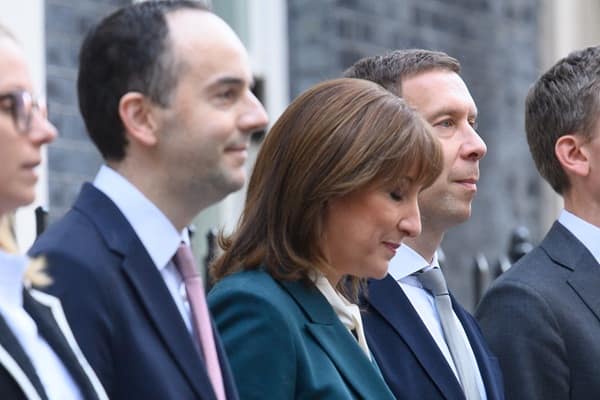
As the long-awaited Autumn Statement finally landed this week, almost half of UK voters (46%) view the Budget as unfair, according to the latest polling from Opinium. Only one in five (22%) think the Chancellor’s decisions were fair.
Neither the Chancellor or Prime Minister has seen any boost to their low approval ratings from the Budget, but they may be relieved to see their numbers fall no lower, with Rachel Reeves at net -42 and Keir Starmer at net -45.
Budget fall out
As Westminster and the country absorb the implications of Wednesday’s Budget, nearly half of the UK public (48%) have a negative view of the Chancellor’s plans, with over a third (37%) unsure, while only around one in seven (15%) consider it a good budget.
Only one in five (19%) believe the measures will have a positive effect on the economy and almost half (48%) believe the budget will negatively affect their individual finances.
A quarter (25%) of the UK public think the decisions made in the Budget were necessary, compared to 36% who think them unnecessary, and 39% are not sure. Among Labour 2024 voters, under half (45%) think the measures were necessary, while one in five (21%) say they were unnecessary, and a third (34%) are not sure.
Public oppose tax hikes
The public reacted unfavourably to policies in the Budget aimed at increasing taxes. The proposed Cash ISA reforms received a net approval score of -24, while the decision to freeze income tax and National Insurance thresholds for three years sits at net -25. Changes to salary-sacrifice workplace pension schemes, which are expected to raise £4.7 billion, were met with an even lower rating of net -29.
However, some of the Chancellor’s policies landed more positively with the public. Her pledge to freeze rail fares for the first time in 30 years was backed by nearly three quarters (72%) of respondents (net +62), and nearly seven in ten (68%) of the public thought the proposed tax on remote gambling and online betting was a good idea (net +55).
The public generally believe that people in vulnerable groups, such as those on lower incomes (net -2) and disabled people (net -7) would be less negatively impacted than those on higher incomes (net -36).
Leadership highs and lows
In the immediate fallout from the Budget, opposition leader Kemi Badenoch’s forceful response to the Chancellor in the House of Commons may have landed with some of the public, with Badenoch’s approval rating climbing three points this week. Although Badenoch is still in negative approval territory, this leaves her tied with Reform’s Nigel Farage (-4) at net -14. This is Badenoch’s best approval rating this year.
Starmer’s lead over Badenoch on the question of who the best PM would be has narrowed to 2 points (-3), with nearly half (48%) preferring ‘none of these’. Nigel Farage continues to hold a wider lead over Starmer by 6 points (+2).
When asked which Party would be better handling the economy, a quarter (25%) of respondents said the Conservatives led by Badenoch, compared to one in five (19%) (-1) who selected Labour led by Starmer, giving the Tories a lead of 6 points. However, two in five (42%) (+2) do not view either as a good choice.
James Crouch, head of policy and public affairs at Opinium, said: “Almost half of voters think this was a bad budget, making it the worst-received fiscal event since the Mini-Budget in 2022. Scrapping the planned income tax rise may have softened the blow, but this Budget does nothing to pull the Government out of its polling freefall.”