China introduced its first national standard for solid-state EV batteries as the “holy grail” of battery tech moves closer toward mass production.
China launches solid-state EV battery national standard
China has emerged as a true automotive powerhouse thanks to its lead in the shift to electrification. It’s now projected to overtake Japan in global vehicle sales for the first time in 2025.
To stay ahead, domestic leaders like BYD and CATL are advancing new batteries and other EV technology, including solid-state, LFP, sodium-ion, and ultra-fast charging in five minutes.
After introducing its first national standard for solid-state EV batteries on Tuesday, China is taking another big step toward bringing the promising new tech to market. China’s National Automotive Standardization Technical Committee released “Solid-State Battery for electric vehicle – Part 1: Terms and Classification,” which is now open for public discussion.
The draft is designed to categorize and clearly define solid-state batteries. Based on how ions move within the cell, batteries are classified as liquid, hybrid solid-liquid, or solid-state.
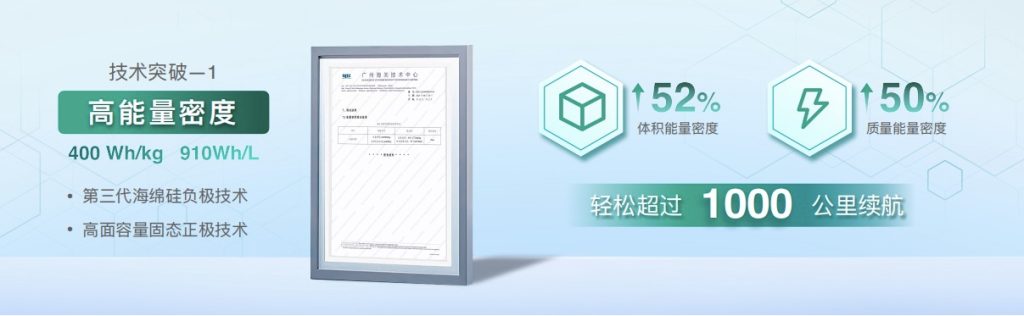
Since the draft doesn’t include “semi-solid-state” batteries, which several domestic brands have already mentioned, it appears this classification will no longer be used.
It then breaks solid-state batteries down by electrolyte type (sulfide, oxide, composite, polymer, or halide), conducting ion (lithium or sodium), and whether it’s high-energy or high-power.
The draft sets the allowable weight-loss rate to qualify as a solid-state battery at no more than 0.5%, stricter than the 1% rate set by the China Society of Automotive Engineers earlier this year.
China is the first to propose a national standard for solid-state EV batteries. The draft is the first of four installments as the promising new battery tech inches closer to commercialization.
CATL and BYD already account for over 50% of the global EV battery market, but both are betting on new tech to stay ahead. Both aim to begin producing solid-state batteries on a small scale around 2027, with mass production toward the end of the decade.

A new solid-state electrolyte pilot backed by CATL, SAIC Motor, and Guolian Automotive Power Battery Research Institute Co recently received regulatory approval in China.
Guolian Automotive Power Battery Research Institute is a state-owned enterprise advancing the development of NEV batteries, with shareholders including Dongfeng Motor, Changan Auto, CATL, FAW Group, and several other major Chinese companies.
The program “All-Solid-State Electrolyte Pilot Production and Testing Validation Capability Construction Project” is designed to accelerate the development of all-solid-state EV batteries by researching and developing electrolyte solutions, a key component for mass production.
Electrek’s Take
China isn’t the only country advancing new EV battery tech, including solid-state batteries. Japanese automakers, including Toyota, Nissan, and Honda, aim to introduce solid-state batteries around 2028, with mass production closer toward the end of the decade.
German automakers such as BMW, Volkswagen, and Mercedes-Benz have set a similar timeline. US-based Factorial, which is working with Mercedes-Benz, Stellantis, and several others, said its batteries could begin powering EVs as soon as 2027.
Factorial’s battery cells were used during a road test in September, during which a modified Mercedes EQS drove over 745 miles (1,200 km) on a single charge.
When will we see it available to the masses? They are expected to be first used in premium or higher-performance models around 2027 or 2028, before reaching mass-market EVs at or slightly after the end of the decade.
Source: CarNewsChina, China National Automotive Standardization Technical Committee


FTC: We use income earning auto affiliate links. More.
![Sunrise Wind is back, collapsing Trump’s offshore wind shutdown [update]](https://i0.wp.com/electrek.co/wp-content/uploads/sites/3/2026/01/Sunrise-Wind-Orsted.jpg?resize=1200%2C628&quality=82&strip=all&ssl=1 "Sunrise Wind is back, collapsing Trump’s offshore wind shutdown [update]")