In the week where President Trump captured his Venezuelan counterpart, Opinium’s latest polling has shown that the UK’s Prime Minister, Sir Keir Starmer, entered the new year falling further in the polls, with his approval now sitting at –46.
No party leader has entered 2026 in positive territory with Keir Starmer languishing at net –46, which is his joint lowest score ever and equal to Theresa May’s lowest score in May 2019. Kemi Badenoch stands at net -11 and Nigel Farage net –15.
Liberal Democrat leader, Ed Davey, is currently the most popular leader with voters at net –2, with Zack Polanski of the Green Party close behind on net –3.
Polling shows a tight contest between Starmer and Badenoch, with a one-point lead for Starmer on 21% compared to Badenoch’s 20%. However, almost half of respondents (48%) say they would choose neither as Prime Minister. When Starmer is compared directly with Farage, Farage leads by six points (30% vs 24%).
Attitudes around the UK’s ‘special relationship’ with the US is far from settled, with only one in three (30%) seeing the relationship as generally positive for the UK. However, one in five (20%) believe it limits Britain’s independence and around one in six (16%) do not believe the special relationship exists at all.
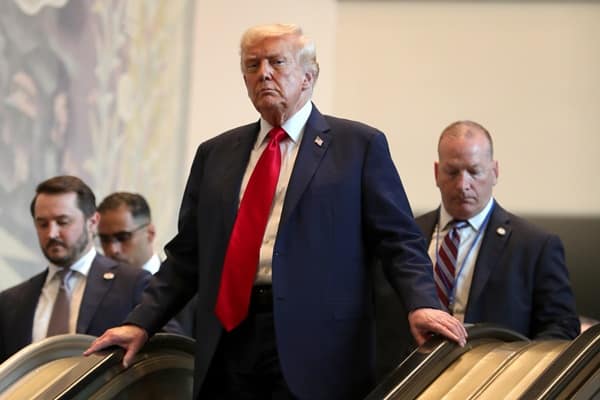
Views of Donald Trump among the UK public are similarly mixed. He is seen as someone who gets things done (net agreement: +24), who sticks to his principles (+16). However, trust remains a significant weakness (net agreement: -45)
The United States’ recent military operation in Venezuela has divided public opinion, with just over one in three (36%) people opposing the action, compared to just over a fifth (22%) who support it. A further quarter neither support nor oppose the intervention (24%).
These attitudes differ by political affiliation, as polling from Opinium shows that Conservative (net support 4) and Reform (net support +27) voters are more likely to support the US action, while Labour (net support -20), Liberal Democrat (net support -38) and Green (net support-64) voters are much more inclined to oppose it.
A majority of the UK public did not have a strong view on Starmer’s response to the situation in Venezuela, with a quarter (24%) neither approving or disapproving, and a third (31%) not holding an opinion. Despite this there is no clear consensus on how the UK should respond, the most common position, held by a third of the UK population (32%), is that the UK should avoid taking sides and instead call for restraint and a peaceful transition. Roughly, one in five (18%) support the removal of Nicolás Maduro but believe the UK should avoid stating a view on legality.
James Crouch, Head of Policy and Public Affairs at Opinium said, “The era of the United States as an unquestioned ally for the UK appears to be over according to the British public. The gap between public opinion and what Britain’s leaders feel they need to say to maintain the ‘special relationship’ now appears wider than at any point in recent years.”