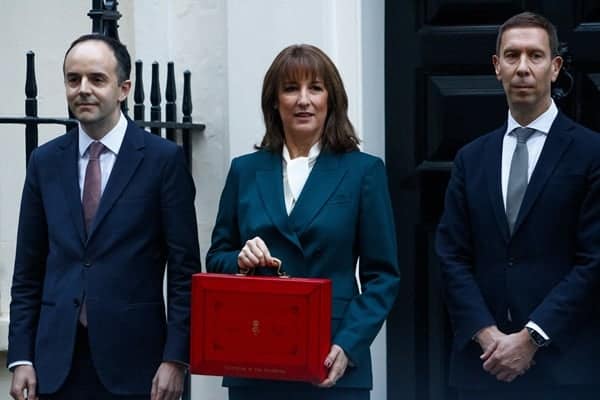
Nimesh Shah, CEO of Blick Rothenberg said, “Even before Rachel Reeves stood up to deliver her Budget 2025 speech, this is already one of the most damaging Budget statements in living memory and will leave a lasting impact for a generation.
He added: “The 2% increase to dividend tax rates, property and savings (raising over £2 billion) presumably breaks Labour’s manifesto pledge not to increase Income Tax”.
Nimesh said: “The reduction in the cash ISA limit to £12k will cost a higher rate taxpayer over £140 in income tax (assuming interest rate of 4.5% and no personal savings allowance)”.
He added: “The ISA regime has just been made (even more) unnecessarily complicated by having a different regime for over-65s. I understand the logic but this is making a mess of ISAs”.
Nimesh said: “The changes to salary sacrifice pensions from 2029 are another damaging blow to business after last year’s employer’s NIC increase. This will be inflationary and lead to further job losses”.
He added: “It was a certainty that personal tax allowances and thresholds would be frozen in today’s Budget. I wasn’t expecting it would be for another 3 years and will drag almost 1 million people into higher rate (40%) tax.”
Nimesh said: “Changes to dividends, property income and savings introduces new rates into the personal tax system which add further complexity into the already complicated regime”.
Nimesh Shah, CEO of Blick Rothenberg said: “Even before Rachel Reeves stood up to deliver her Budget 2025 speech, this is already one of the most damaging Budget statements in living memory and will leave a lasting impact for a generation.
He added: “The 2% increase to dividend tax rates, property and savings (raising over £2 billion) presumably breaks Labour’s manifesto pledge not to increase Income Tax”.
Nimesh said: “The reduction in the cash ISA limit to £12k will cost a higher rate taxpayer over £140 in income tax (assuming interest rate of 4.5% and no personal savings allowance)”.
He added: “The ISA regime has just been made (even more) unnecessarily complicated by having a different regime for over-65s. I understand the logic but this is making a mess of ISAs”.
Nimesh said: “The changes to salary sacrifice pensions from 2029 are another damaging blow to business after last year’s employer’s NIC increase. This will be inflationary and lead to further job losses”.
He added: “It was a certainty that personal tax allowances and thresholds would be frozen in today’s Budget. I wasn’t expecting it would be for another 3 years and will drag almost 1 million people into higher rate (40%) tax.”
Nimesh said: “Changes to dividends, property income and savings introduces new rates into the personal tax system which add further complexity into the already complicated regime”.
Financial Services specifically:
Banking
No new bank levy changes, but the overall tax burden continues to rise, creating a risk of competitiveness erosion compared to EU and US peers.
Asset & Wealth Management
Positive: ISA reforms and higher dividend tax rates are likely to push savers toward investment products, benefiting asset managers. Negative: Changes to National Insurance on salary-sacrificed pensions could reduce pension contributions, while fiscal drag from frozen tax thresholds will squeeze disposable income, limiting inflows.
Insurance
Persistent inflation and wage pressures will increase claims costs, requiring pricing model recalibration and tighter risk management.
Fintech & Capital Markets
The digitalization agenda (e.g., digital gilts) continues, but there is no major deregulatory boost. IPO activity may see a modest lift from SDRT tweaks, though macro headwinds remain significant.
Regulatory Environment
Compliance costs are rising, and many clients are already voicing concerns about the burden of regulation, which could dampen investment appetite.
2% income tax increase
Winnie Cao, a Partner at Blick Rothenberg, said “The 2% income tax increase for dividend, property and savings income means that more people will be encouraged to use Family Investment Company structure to hold assets, reducing the ongoing income tax on a personal level.”
She added: “Given the introduction of the high value council tax surcharge, this will further hit the prime central London market. Could this be a good timing for investors to find a bargain, or restructure their property portfolio?”
Winnie said: “While it was encouraging to hear the Chancellor talk about making the UK an attractive destination for entrepreneurs, it is disappointing that no measure comes with it to back up her claim. It would have been simple to switch back to the £10million Business Asset Disposal Relief (previously known as Entrepreneur’s Relief), rewarding entrepreneurs create and grow businesses in the UK who will bring the much needed vibrancy to the country”.
NIC rise
Robert Salter, a Director at Blick Rothenberg, said: “It is interesting to note that the OBR Report for the Budget highlights that the increase in Employer’s NIC costs that arose from the last Budget – and came into effect from April 2025 – have been a significant factor behind the increase in unemployment in the last 12 months.”
Removal of the CGT exemption
Neil Insull, a Partner at Blick Rothenberg, said “Employee ownership trusts were brought in with much fanfare in 2014 to simplify succession planning and bringing corporate ownership to employees. It is therefore disappointing to see a removal of the CGT exemption on sales and bring 50% of gains into charge. This will almost certainly jeopardise the wish for entrepreneurs to pass their shares to employees in the future.”
US/UK
David Livitt, a Partner at Blick Rothenberg, said “US taxpayers will now reconsider holding income-producing assets in the UK vs US and favour US mutual funds/ETFs (avoiding UK funds because of PFIC rules, and consider shifting investments toward growth assets as less current income. Does this make UK reporting more complex…”
Michael Holland, a Partner at Blick Rothenberg, said: “The loss of tax free pension salary sacrifice means Americans in the UK have one less opportunity to mop up excess Foreign Tax Credits. Overall it is encouraging for Transatlantic Businesses/US Expansion businesses that the USA as a key partner is mentioned in the first 60 seconds and that boosting international trade is later referenced as part of positive growth story.”
Bal Lota a Partner at Blick Rothenberg, said “Increases to the UK income tax on personal investment income is unwelcomed news to American’s. This is lightly to result not just higher tax costs on investment income when looking at the worldwide tax cost (most likely to be UK&US), but also a frustration that they might have foreign tax credits which are wasted if not used within 10 years.”
+90 year olds filing tax returns
Heather Powell, a Partner at Blick Rothenberg, said: “Is HMRC going to start a recruitment campaign to build a team to help the +90 year olds who are off line who will be required to file personal tax returns from 2027? If they start now the personnel should be in role and trained in time to ensure that our elderly pensioners can comply with their filing requirements.”
Scrapping salary sacrifice
Malli Kini a Partner at Blick Rothenberg, said “Scrapping salary sacrifice for pensions dismantles one of the UK’s most effective and widely used saving mechanisms. Over 7 million employees rely on it to boost pension contributions and reduce National Insurance, while employers depend on it to manage payroll costs efficiently.”
He added: “Crucially, salary sacrifice is also one of the only practical and legitimate planning tools available to taxpayers trapped in the £100,000 tax cliff edge, where the withdrawal of the personal allowance creates an effective 60% marginal tax rate between £100,000 and £125,140. Removing it would trap thousands of senior professionals including NHS consultants, senior public sector staff, finance professionals and business owners. They will be in punitive tax territory with no realistic route out other than asking for lower pay!”
Council tax surcharge
Fiona Fernie, a Partner at Blick Rothenberg, said: “Council tax surcharge is thought to likely affect 100,000 homes – mostly in the South East. The OBR estimates it will raise around £0.4billion. This is a very small amount, particularly given that there will be a huge additional administration burden to revalue properties in bands F, G and H to determine if they are now valued above £2million and if so where they sit within the price bands which will determine the amount of the additional tax. That admin burden will inevitably eat into the amount collected.
She added: “The proposals also just emphasise the North South divide that Labour claim to want to “level up” since the higher valued home in the South already drain their owners’ resources with bigger mortgage payments.”