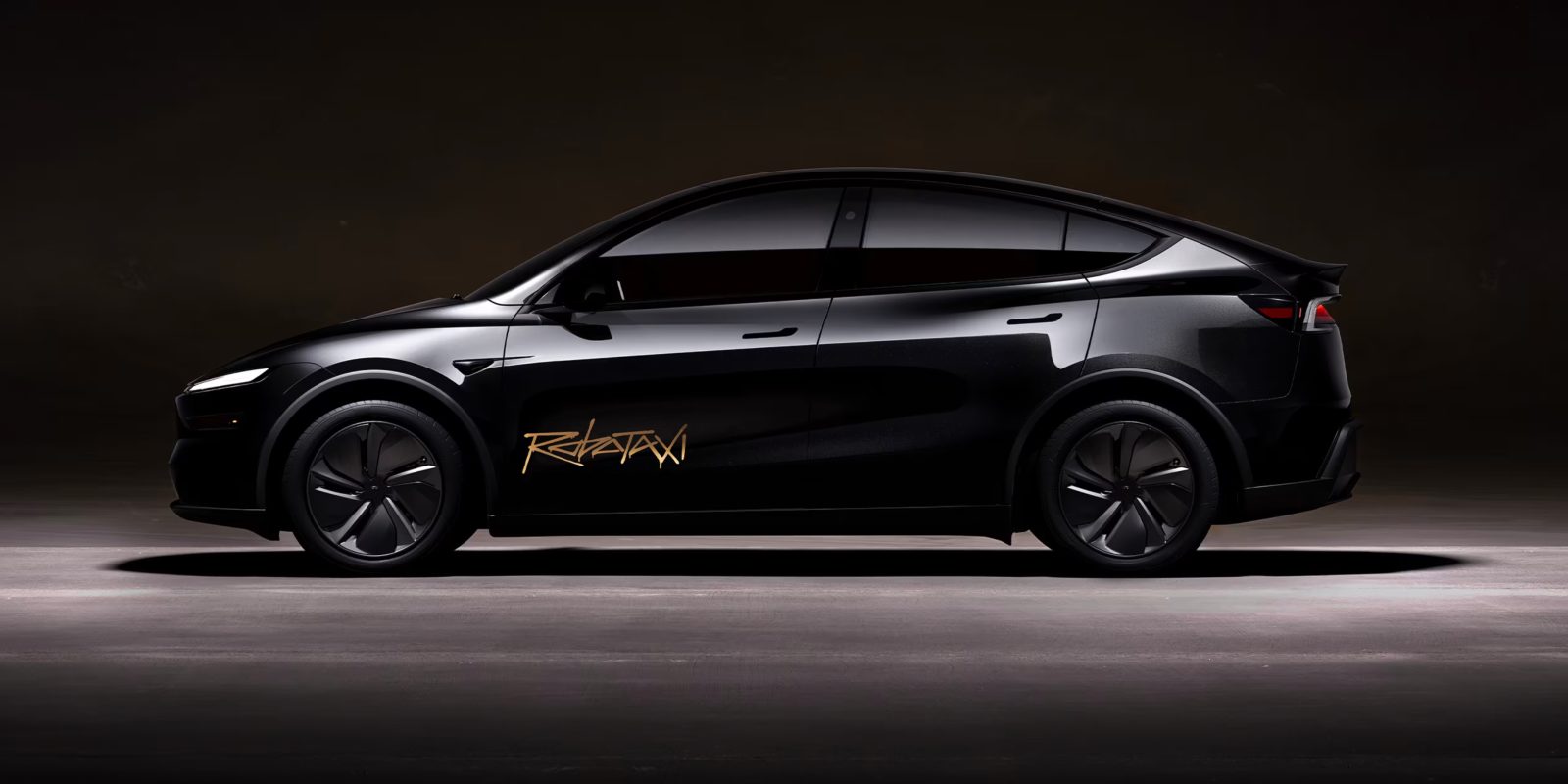
Tesla launched its “Robotaxi” service in Austin eight months ago. In that time, Elon Musk promised 500 cars in Austin, coverage for half the US population, fully unsupervised rides, and expansion to 8-10 cities, all by the end of 2025. None of it happened.
Today, the service has roughly 42 cars in Austin, availability below 20%, a crash rate 9 times worse than human drivers, and the “unsupervised” rides Musk hyped before earnings have vanished from the tracker. Here’s the full status check.
Fleet size: promised 500, delivered ~42
On the Q4 2024 earnings call, Musk declared that Teslas would be driving autonomously in Austin “with no one in them” by June 2025. In October 2025, he told the All-In podcast that Tesla would have “500 or more in the Greater Austin area” by year-end.
What actually happened: Tesla launched in June with roughly 10 Model Ys and a safety monitor in the passenger seat. By December, independent trackers counted 32 vehicles. Musk quietly slashed the target from 500 to ~60 in November, and still missed it. When Waymo announced 2,500 active robotaxis across the US, including about 200 in Austin alone, Musk’s response was to call them “Rookie numbers.”
Today, Robotaxi Tracker shows roughly 42 Tesla vehicles in Austin. On the Q4 2025 earnings call, Musk claimed “well over 500” across Austin and the Bay Area combined and suggested the fleet could reach 2 million within a year through monthly doubling. Independent trackers show roughly 200 total.
But focusing on Austin, since the Bay Area fleet is basically just Uber with FSD, it appears Tesla has no more than two dozen vehicles active during the week.
Availability: 19% — the service barely functions
Fleet size is only half the story. The bigger problem is that the cars aren’t running.
Over the last 48 hours, Robotaxi Tracker data shows the Austin service was available just 19% of operating hours, 81% unavailable. This means there are typically only a few vehicles online at any given time across the entire service zone. Riders in most areas simply cannot get a ride most of the time.
This isn’t a commercial service. It’s a tech demo with a booking screen.
For comparison, Waymo has over 100 vehicles operating in Austin through Uber across 90 square miles, fully driverless, 24/7. Waymo is now providing roughly 20% of all Uber rides in Austin. Tesla won’t disclose ride volume, but it is expected to be extremely low.
‘Unsupervised’ rides: announced, but extremely limited
On Tesla’s Q4 2024 earnings call, Musk promised “fully autonomous” rides with no one in the car by June 2025. When the service launched in June, it had a safety monitor in the passenger seat. In December, Musk said at an xAI hackathon that “unsupervised is pretty much solved” and promised driverless rides in Austin “in about three weeks.”
On January 22, less than a week before Tesla’s Q4 earnings call, Musk finally announced that Tesla had started offering rides without a safety monitor in the car. The stock jumped 4%.
But the claim immediately unraveled. Video evidence showed every “unsupervised” ride being followed by chase cars with safety monitors inside. Tesla confirmed this on the earnings call. One enthusiast, David Moss, took 58 rides over a week before finally getting a single unsupervised one. Tesla’s AI lead Ashok Elluswamy acknowledged only “a few unsupervised vehicles” were mixed into the fleet.
Then the unsupervised rides stopped. As we reported, the “unsupervised” Robotaxis vanished from the tracker within a week of the pre-earnings announcement.
Very few truly unsupervised rides have been available since. When they were running, they were confined to a tiny corridor along South Congress Avenue and Lamar Street, not the broader service area.
This points to Tesla limiting the service to a small, mapped-out area to limit the chances of accidents.
Coverage: promised half the US, serving parts of two cities
In July 2025, Musk said with a straight face that “half of the population of the US” would be covered by Tesla Robotaxi by year-end. At the time, Tesla operated in roughly half of Austin. In October, he predicted “8 to 10 metro areas by the end of the year.”
Eight months later, Tesla operates in two cities: Austin and San Francisco. Tesla plans to expand to seven more — Dallas, Houston, Phoenix, Miami, Orlando, Tampa, and Las Vegas — in the first half of 2026. But based on what we see in Austin, where 42 vehicles can’t maintain 20% availability across a single city, it’s unclear what expanding to seven more cities would actually look like.
Rain shuts it down
Tesla’s “Robotaxi” service shuts down when it rains in Austin. The city averages over 80 days of rain per year.
Tesla’s vision-only system relies on eight cameras to navigate. Rain, fog, and sun glare obstruct those cameras, degrading the system’s ability to function safely. NHTSA specifically asked Tesla how it planned to operate in low-visibility conditions, Tesla asked the agency to hide its response.
Waymo uses lidar, radar, and cameras together, providing redundancy in poor weather. It operates 24/7, rain or shine.
For a service already available less than 20% of the time in good weather, losing additional days to rain makes an already thin operation even thinner.
Crash rate: 9 times worse than humans — with a monitor
Tesla’s own data reported to NHTSA confirms a crash rate roughly 9 times worse than human drivers, and that was with a trained safety monitor in the car.
Nine crashes in approximately 500,000 miles: one crash every 55,000 miles. Human drivers average one police-reported crash every 500,000 miles. The incidents include driving on the wrong side of the road, hitting a cyclist, striking an animal at 27 mph, and requiring emergency intervention at a train crossing.
Tesla redacts the narrative section of every single NHTSA crash report. Waymo, Zoox, and every other AV operator provide full descriptions. Tesla is the only company systematically hiding the details.
Tesla is now removing in-car safety monitors from vehicles that crash at 9 times the human rate, albeit in very limited ridea, as previously noted. Meanwhile, Musk recently admitted Tesla needs 10 billion miles of data for “safe unsupervised self-driving”, a threshold the fleet won’t hit until roughly July 2026 at the earliest.
The scorecard: what Musk promised vs. where we are
| Musk’s promise | When he said it | Reality (Feb. 2026) |
|---|---|---|
| “No one in them” in Austin by June 2025 | Q4 2024 earnings | Launched with safety monitors; still mostly supervised |
| 500 cars in Austin by end of 2025 | Oct 2025 (All-In) | ~42 cars, 19% availability |
| Half the US population covered by end of 2025 | Jul 2025 | Two cities: Austin and SF (and SF is a stretch) |
| 8-10 metro areas by end of 2025 | Oct 2025 | Again, two cities |
| “Unsupervised is pretty much solved” | Dec 2025 (xAI hackathon) | Unsupervised rides vanished from tracker |
| Safety monitor leaves by end of 2025 | Sep 2025 (X post) | Most rides still have monitors |
| 2 million robotaxis within a year | Jan 2026 earnings | ~200 total across two cities |
Electrek’s Take
We’ve now spent over a decade documenting Elon Musk’s autonomous driving predictions. There’s even a Wikipedia page dedicated to tracking them. The pattern hasn’t changed, only the stakes have.
Eight months into this program, every single metric tells the same story: Tesla’s “Robotaxi” service is a small-scale pilot masquerading as a commercial launch. 42 cars. 19% availability. Service that shuts down in rain. “Unsupervised” rides that appeared days before earnings and vanished days after. A crash rate 9 times worse than human drivers. And every crash report narrative redacted.
Meanwhile, in the same city, Waymo runs over 100 vehicles, fully driverless, 24/7, across 90 square miles, with a 4.9-star rider rating. The two services are not comparable. One is an actual transportation service. The other is a proof of concept that can’t stay online 81% of the time.
Normally, that would be fine. We could cover how Tesla is trying to compete with a different approach, but we can’t really report on it like that because that’s not what Tesla, and especially Elon Musk, are claiming.
They are trying to sell the idea that Tesla is the leader in autonomy and that Waymo is the “rookie.” They have to do that since Tesla’s auto business is in decline and its valuation, worth 300 times earnings, is solely based on the idea that Tesla will somehow catch up to Waymo and then outscale it, despite a complete lack of evidence.
Therefore, we have to compare Tesla’s Robotaxi to what Musk is claiming, and that’s when it starts to look bad.
Everything points to Tesla having the same scaling problems as Waymo, while still having a weaker autonomy stack.


FTC: We use income earning auto affiliate links. More.