In the competitive residential landscape of London, the definition of a “smart home” has undergone a rapid evolution in 2026. For the city’s entrepreneurs and high-net-worth individuals, domestic technology is no longer judged by the novelty of voice commands or remote lighting, but by its ability to function as “invisible infrastructure.” The goal is a home that self-optimizes, removing the friction of daily maintenance from the owner’s cognitive load. As property standards rise, the modern robotic pool vacuum has emerged as the next essential asset, transitioning from a seasonal gadget to a foundational system that preserves both the property’s value and the owner’s most precious resource: time.
The operational efficiency of private estates
Maintaining a premium swimming pool in London’s climate has historically been an exercise in relentless oversight. The traditional model relied on reactive maintenance—hiring service crews or using manual cleaning tools that required constant human supervision. For a high-performance lifestyle, this model is fundamentally inefficient. It creates a recurring interruption to the weekend and a persistent mental note to “check the water” after every typical British rain spell.
The disruption in 2026 is driven by the shift toward navigational sovereignty. Modern systems have replaced the randomized “bump-and-turn” logic of the past with sophisticated SLAM-based neural mapping. This allows the device to create a digital twin of its underwater environment, calculating the most efficient path matrix in real-time. By moving away from reactive movement and toward predictive spatial reasoning, the modern cleaner has transformed into a dependable piece of home infrastructure that scales efficiency without human intervention.
Technical performance matrix: The 2026 standards
To understand why London homeowners are upgrading their aquatic systems, one must look at the performance gap between legacy automation and modern autonomous infrastructure. The following matrix outlines the strategic shift in maintenance technology:
| Feature Dimension | Legacy Automated Cleaners | 2026 Autonomous Infrastructure |
| Navigational Logic | Randomized “Bump-and-Turn” | SLAM-based Neural Mapping |
| Connectivity | Tethered (Cables & Hoses) | 100% Cordless Architecture |
| Primary Focus | Floor Cleaning Only | Comprehensive Surface & Floor Management |
| Human Touchpoints | Daily Monitoring & Manual Rinsing | Monthly Retrieval & Self-Cleaning |
| Operational Impact | Reduces Labor | Deletes the Task Entirely |
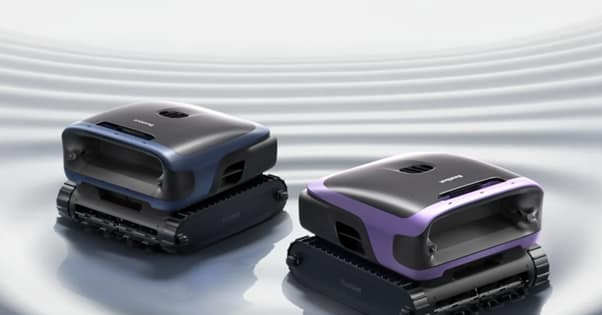
This technical leap is best embodied by the Beatbot Sora 70 pool cleaning robot cordless. By eliminating the physical umbilical cord, the system removes the single greatest failure point in robotic cleaning. Without cables to snag or limit range, the robot can execute complex path-planning with repeatable precision, ensuring the pool is always in a state of crystalline readiness.
The psychological shift: From monitoring to absence
For most London homeowners, this shift didn’t register as a feature upgrade or a cost analysis. It registered as absence. The first weekend passed without checking the pool dashboard. Then another. No one asked whether the system had run or if conditions were “good enough.” The environment simply remained ready. That was the moment the workforce disappeared from awareness. At that point, efficiency is no longer measured in output—it is measured in what no longer needs to be thought about.
Most homeowners only noticed the change in hindsight—when weeks had passed without a single thought about the pool, and nothing had gone wrong. There was no mental note to check the water, no reminder to look at it later, and no adjustment to weekend plans. The responsibility had fully transferred. This is the moment maintenance becomes truly invisible, and the pool finally fulfills its original promise as a sanctuary for uninterrupted leisure. Reclaiming your time is the ultimate upgrade, turning maintenance into a solved problem and leisure into a permanent state.
Engineering the silent steward
The sustainability of this “invisible” status depends on a commitment to closing the automation loop. A robot that cleans the pool but requires a human to manually rinse its filters every day is still tethered to a human schedule. The newest generation of hardware has addressed this by automating the maintenance of the robot itself. Through self-cleaning stations and advanced internal flushing cycles, the system maintains peak operational efficiency without human contact.
Furthermore, surface management has become the strategic front line. Floating debris is the primary driver of chemical demand; if allowed to sink, it spikes the metabolic load on the primary filtration system. By utilizing technologies like JetPulse™ propulsion, the modern robot maintains a stable trajectory across the surface even in erratic wind. It intercepts debris while it is still buoyant, a defensive strategy that protects the long-term integrity of the pool’s infrastructure.
Conclusion: The new standard of luxury
The evolution of the autonomous backyard is a story of reclaiming focus. We have moved past the era of gadgets that demand our attention and into an age where our homes are capable of proactive stewardship. In 2026, the integration of a truly autonomous robotic pool vacuum is the final piece of the modern home puzzle. It is a commitment to an environment where the technology is sophisticated enough to be silent.
By delegating the repetitive tasks of the past to the intelligent systems of the future, we ensure that our outdoor spaces remain exactly what they were meant to be: places to reconnect with what matters most. For London’s elite, the Beatbot Sora 70 pool cleaning robot cordless is not just a cleaning tool—it is the invisible infrastructure that makes a high-performance lifestyle possible, turning property maintenance into a background process that simply works.