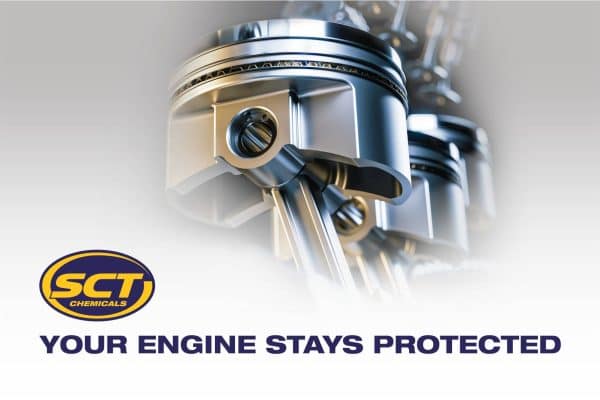
The share of friction-related costs in a car constitutes a significant part of operational expenses and can reach 20-30% of total fuel consumption, depending on driving conditions and vehicle condition. These costs are made up of rolling resistance of tires (up to 20%) and friction in the transmission, engine, and other components (about 10%).
The philosophy of reducing friction in lubricants: Juri Sudheimer’s approach
As the founder of SCT Chemicals FZE, Juri Sudheimer emphasizes, modern understanding of the role of friction modifiers goes far beyond simply reducing the coefficient of friction. “Our task is not just to create a slippery surface, but to form optimal tribological conditions for each specific friction unit, taking into account the region’s extreme climatic conditions,” Juri underscores.
This philosophy formed the basis for the development of modern lubricants at the fully automated SCT Chemicals plant in Dubai, where, since February 2022, continuous work has been carried out to improve the formulas of friction modifiers adapted to the Middle East climate. A team of 188 specialists, led by Development Director Erik Sudheimer, creates a wide range of high-quality oils and lubricants, each containing carefully selected friction modifiers for operation at temperatures up to +50°C.
Purpose of lubricants
The purpose of any lubricants is to reduce the amount of friction between two surfaces and save energy; for a car, this means saving fuel. Today, in most cases, the base oil included in commercial oil or grease may not have sufficient lubricating ability to fully perform this function. The metallurgy of parts may also require a special chemical composition.
For example, in the case of worm gears, traditional anti-seize or anti-wear additives are often too chemically aggressive for softer non-ferrous metals. In worm gear units, the worm wheel rim is often made of bronze, to which sulfur and phosphorus, present in these additives, are highly aggressive. In this situation, special neutral friction modifiers are added to the oil to improve lubricity. Conversely, in automatic transmissions, the same fluid is used for lubrication, hydraulic power transmission, and many other functions.
Here, the clutches made up of friction disks require friction for proper operation. In this case, for a smooth transition between gears, friction modifiers are needed that provide frictional properties to avoid jerking and slipping during clutch operations. Otherwise, the automatic transmission will either “lag” or jerk, causing damage to the clutches and irritating the driver.
Friction modifiers: Principle and types
A range of compounds is used to change the coefficient of friction of a lubricant. Collectively, they are known as friction modifiers. They are designed to change the amount of energy needed to move two surfaces relative to each other. This can mean reducing friction and increasing fuel economy in most cases, or increasing it in the case of clutch frictions.
Friction modifiers are a key component of modern engine oils. Their main task is to reduce friction between moving engine parts, which improves engine performance and increases its service life.
A terminology issue should be noted. Until recently, there was a clear distinction between actual friction modifiers (Friction Modifiers), anti-wear (AW) additives, and extreme pressure (EP) additives. Now, the line between the terms “friction modifier” and “anti-wear additive” is gradually blurring. It is common today to see anti-wear additives (like zinc dialkyldithiophosphate, ZDDP) referred to as friction modifiers, and friction modifiers called anti-wear additives. From experience, we know wear is directly connected to friction.
Friction modifiers reduce (and sometimes increase) the force of friction between surfaces by forming thin layers for sliding, while anti-wear additives prevent part wear by forming protective films. EP additives work under very high loads, preventing scoring and damage on friction surfaces.
Functions of friction modifiers
Friction modifiers are needed to:
- Reduce friction between metal surfaces, thereby reducing energy losses and increasing engine efficiency
- Reduce engine part wear to extend service life
- Improve engine performance and reliability for more stable operation
- Improve fuel efficiency by reducing fuel consumption
- Lower operating temperatures, reducing thermal stress on the engine
- Reduce noise
How they work
In most cases, friction modifiers are either surfactants or substances with a layered structure. They alter the properties of the surfaces in contact, forming a thin layer on the metal surface that eases sliding and reduces friction force. This process is called selective adsorption of surfactants. The layer allows the engine to run smoother and more efficiently.
Different modifiers can form various types of layers: a layer of reacted substances, adsorbed substances, liquid or solid polymers, organometallic compounds, and true layered substances (graphite, molybdenum disulfide MoS2, hexagonal boron nitride h-BN or “white graphite,” and PTFE – commonly known as Teflon).
Types of friction modifiers
There are organic and inorganic friction modifiers, the most common of which include:
- Inorganic compounds:
- Graphite, molybdenum disulfide: used in heavily loaded conditions to reduce friction.
- Hexagonal boron nitride (h-BN, “white graphite”): used to reduce start-up wear and facilitate cold starts.
Note: For many years, SCT Chemicals has produced oils and additives containing molybdenum disulfide, such as MANNOL Molibden 10W-40 7505 and MANNOL Molibden Additive 9991.
Several years ago, SCT released MANNOL Ceramo Ester 9829 based on h-BN, which became so popular that in 2025 SCT launched an entire “Ceramic” line: MANNOL Ceramic 5W-30 7720, MANNOL Ceramic Ultra 5W-40 7727, and MANNOL Ceramic Pro 10W-40 7726.
The working principle of MoS2 and h-BN is determined by their layered structure, similar to graphite. When you use a pencil, graphite layers flake off and stay on the paper—just as these two substances consist of layers that easily slide over each other.
- Organic compounds:
- Fatty acids and esters that form a protective layer on the metal surface
- Polymers that improve oil lubricating properties under heavy loads
- Molybdenum compounds known for greatly reducing friction and wear
Recently, due to increasing environmental requirements, there has been a gradual replacement of inorganic molybdenum disulfide with “organic molybdenum,” mainly molybdenum dithiocarbamate (MODTC) and molybdenum dithiophosphate (MODTP). MoS2 can sometimes decompose into molybdenum and sulfur, which has negative consequences by accelerating corrosion. Using pure MoS2 also requires strict oil change intervals; any delay can lead to oil degradation and dangerous deposit build-up. MODTC and MODTP, on the other hand, are clear liquids without these drawbacks – in these, MoS2 is a part of a complex molecule, and sulfur is tightly bound, so MoS2 is released gradually and in needed quantities right in the friction pair. As Erik Sudheimer notes, the switch to organic molybdenum was the result of many years of research into the tribological properties of various friction modifiers.
Friction modifiers were first used in engine oils in 1915, particularly in differentials, wet-clutch systems, and transmissions. Their use expanded greatly after the oil crisis of the late 1970s, which increased the importance of fuel economy in automotive design.
The vast majority of today’s friction modifiers are designed to reduce friction and improve lubricity to achieve better fuel economy. Recently, US government standards have raised average corporate fuel efficiency (CAFE) targets to 54.5 miles per gallon – twice the previous standard – which triggered a demand for lower-viscosity engine oils that still provide adequate lubricating films. One solution to this problem was the widespread adoption of organic molybdenum in engine oils.
Most MANNOL oils are distinguished by the presence of synthetic complex esters, which are also friction modifiers, often providing a synergistic effect with other modifiers. Synthetic esters are categorized as organic friction modifiers; they have long soluble chains and a polar head, which attaches to metal surfaces, while the chains arrange close together like carpet fibers, forming dense monolayers or thick, viscous layers. These layers shift easily and create relatively slippery surfaces.
Revolutionary SCT ESTER Technology: Juri Sudheimer’s achievement with esters
In 2019, the team of scientist-engineers at SCT Chemicals FZE managed to adapt aerospace esters for mass production of automotive oils—a challenging task. This innovative SCT ESTER technology was implemented at the SCT Chemicals plant in Dubai, marking a breakthrough in friction modifier technology for extreme climates. Group V ester base oils offer unique tribological properties thanks to their molecular structure, which is crucial in high-temperature Persian Gulf conditions.
Polar ester molecules naturally attract to metal surfaces, forming a durable boundary lubrication film, even at temperatures up to +50°C. This allows for a significant reduction in the coefficient of friction, even under boundary lubrication conditions. The fully automated Dubai plant, with 101 tanks and a total capacity of 22,000 tons, ensures precise ester dosing in each batch. Development Director Erik Sudheimer personally supervises processes to guarantee stable tribological characteristics, and the plant’s four ISO certifications confirm international quality standards.
Anti-wear Additives (AW)
How they work
These additives form a thin protective film on metal surfaces, protecting parts from mechanical wear. Chemical reactions with the metal create a film with lower shear resistance than the metal itself, preventing direct metal-to-metal contact. These include zinc dithiophosphates, organic and inorganic phosphates, organic sulfur and chlorine compounds, sulfonated fats, sulfides, and disulfides.
Most widely used are zinc dithiophosphate (ZDDP) and zinc dialkyldithiophosphate (ZDDP or ZDADP)—multifunctional additives that improve anti-wear, antioxidant, and anti-corrosion properties of oils. Despite modern environmental limitations that have reduced their levels in some oils, they remain the most effective and proven additives for protecting engines and equipment.
In recent years, the content of ZDDP in motor oils has been reduced, mostly due to catalytic converter protection requirements—high phosphorus content can harm converters, crucial for modern emissions systems.
ZDDP has been used since the mid-20th century, with one of the first commercial applications by The Texas Company (now Texaco) in the 1940s.
Extreme Pressure Additives (EP)
How they work
EP additives react with surfaces at very high pressures and temperatures, creating a protective layer that prevents scoring, grooves, and other damage under severe loads.
Modern solutions from SCT Chemicals
Today, the production of anti-wear additives at the SCT Chemicals FZE plant has reached new heights thanks to their own additive production facility, ensuring full quality control for use in the region’s extreme climate. Their advanced lab provides precise analysis of ZDDP and other components at high temperatures, with optimal concentrations for every oil type and compliance with international and ecological standards.
Main EP additives include organic sulfur and chlorine compounds—especially effective are those with several active elements, such as dibenzyldisulfide and chlorinated paraffin. EP additives mostly boost the load-carrying capacity of gear oils (especially for hypoid gears), industrial oils, and greases. Highly active chlorine- and sulfur-containing additives can cause corrosion in nonferrous metals (especially copper alloys), so oils with these additives are more suitable for steel-on-steel pairs and must be used carefully in gearboxes with copper synchronizers.
The levels and effectiveness of EP additives are indicated in the API classification for gear oils – the higher the category (GL-3, GL-4, GL-5), the higher the concentration.
Solid friction modifiers discussed above (disulfide molybdenum, PTFE, graphite) can also act as EP additives, having a colloidal structure in oils.
The most advanced EP additives can also restore metal surfaces. These contain organometallic tungsten or molybdenum compounds.
Anti-wear/extreme pressure (AW/EP) complex additives contain both types of active elements—sulfur, phosphorus, metals, or combinations like phosphorus acid esters with sulfur, metal dithiophosphates, dithiocarbamate salts, and others. An example is phenyl-isopropylphenyl phosphate.
IMPORTANT! Additives containing zinc and esters break down when exposed to water. Water must never enter engine oil—especially during storage. In a running engine, water is evaporated, but if water enters the oil during storage, it will cause separation! With esters, water breaks them down to the alcohol and acid they were made from – and the acid will significantly lower the TBN (total base number). NEVER allow water into oils!
IMPORTANT! All these additives are inevitably depleted over time. As they are used up, both friction-reducing and anti-wear properties worsen. Therefore, oil replacement intervals recommended by your car manufacturer must always be strictly observed!
SCT technologists closely monitor new trends in this market segment and quickly implement them into production if economically justified.
The future of friction modifiers: Juri Sudheimer’s vision
Juri Sudheimer’s strategic vision involves a shift to even more environmentally friendly and efficient solutions, tailored to Middle Eastern conditions. SCT Chemicals FZE is developing its own component production technologies in Dubai, ensuring consistent quality and local climate adaptation for new friction modifier formulas. The plant’s scale and 188-strong team provide the ideal environment for technology scaling across the MENA region. Full automation ensures distribution support to the Middle East, Asia, and international markets.
According to Juri Sudheimer, “The future belongs to intelligent friction modifiers that can adapt to changing engine conditions in real time, especially in the region’s extreme climates.” This concept is already reflected in R&D developments at SCT Chemicals, which unveiled the revolutionary SCT ESTER technology, now produced in Dubai.
Erik Sudheimer adds that the next stage will be the creation of adaptive friction modifiers, capable of altering their properties depending on temperature and engine load up to +50°C. “We are working on technologies that will allow the oil itself to optimize its tribological characteristics during use in Middle Eastern climates,” says the Development Director.