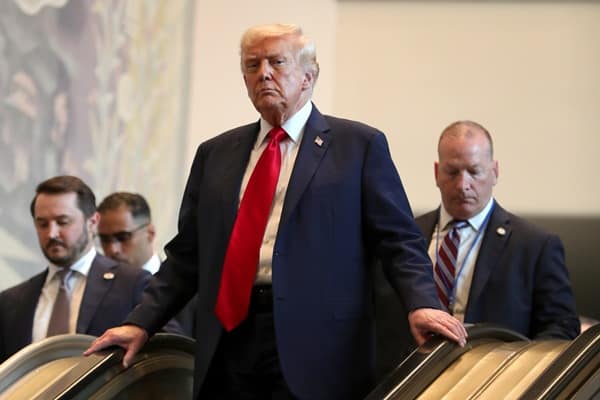
U.S. President Donald Trump has said he is “considering” ordering airstrikes on Iran as part of efforts to pressure Tehran into agreeing to a new nuclear deal.
Speaking during a breakfast meeting with U.S. governors, Trump was asked whether limited strikes by American warplanes were under consideration.
“I guess I can say I am considering that,” he replied.
The remarks follow comments a day earlier in which the president warned that Iran must reach an agreement with Washington to curb its nuclear programme or face “bad things”.
Trump claimed his administration had previously “obliterated” Iran’s nuclear capability with airstrikes last year — an assertion that has not been independently verified.
Addressing members of what he described as his “Board of Peace”, Trump suggested Tehran faces a roughly 10-day window to secure a deal.
“Good talks are being had. It’s proven, over the years, not easy to make a meaningful deal with Iran. We have to make a meaningful deal, otherwise bad things happen,” he said.
He added that Iran “cannot have a nuclear weapon” and warned military action could follow “over the next, probably 10 days” if negotiations fail.
Iran has not publicly accepted the proposed terms and has previously insisted its nuclear programme is for civilian purposes.
Intermittent negotiations have involved U.S. representatives, including Steve Witkoff and Jared Kushner. Talks held in Geneva last week reportedly ended without a breakthrough.
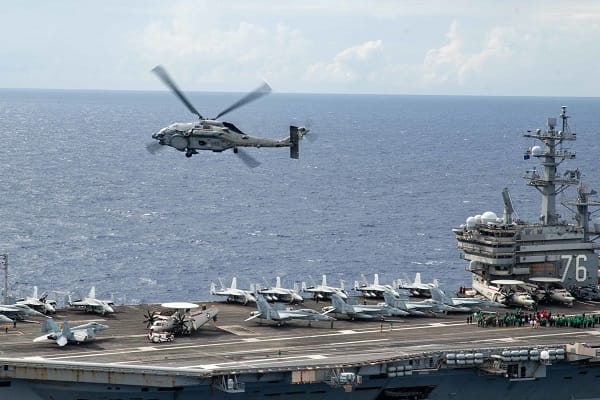
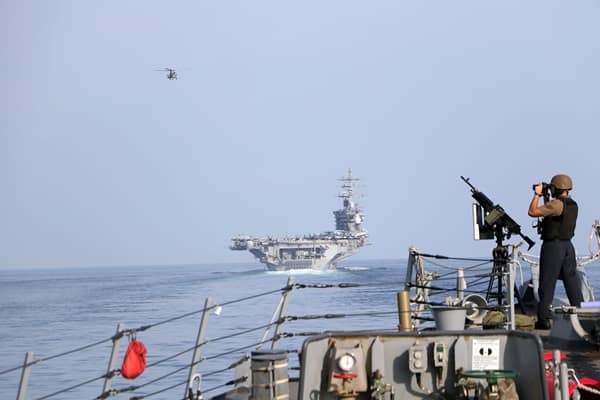
At the same time, Washington has significantly increased its military presence in the region. According to defence officials, U.S. Air Force F-35, F-22 and F-16 aircraft — alongside tanker and command-and-control platforms — have been deployed to bases within operational range of Iran.
Two carrier strike groups — centred on the USS Abraham Lincoln and the USS Gerald R. Ford — are also operating in the region, substantially enhancing U.S. strike capability.
The combination of diplomatic engagement and visible military buildup reflects a familiar dual-track strategy: apply maximum pressure while keeping channels for negotiation open.
Analysts note that any limited strike on Iranian facilities would carry significant escalation risks, potentially drawing in regional actors and disrupting energy markets. Tehran has previously warned it would respond to direct U.S. military action.
With talks ongoing but fragile, the coming days may prove decisive in determining whether the standoff moves toward agreement — or confrontation.