UK wage growth cooling to 4.5% while unemployment remains fixed at 5.1% will likely prompt investors to reassess Britain’s growth trajectory, warns Nigel Green, CEO of global financial advisory giant deVere Group.
The figures, released this morning by the Office for National Statistics, show average pay excluding bonuses easing in the three months to November, while the labour market shows no further tightening.
The chief executive comments: “Individually, the numbers appear modest. Together, they alter the forward-looking picture investors use to price assets.
“When wage growth slows without a corresponding fall in unemployment, markets can be expected to read that as a loss of momentum.”
Investors focus on inflection points rather than absolute levels. After a period where the labour market had been gradually tightening, today’s data suggests that process may be stalling.
“It matters because wage growth underpins consumption, earnings visibility, and confidence in domestic demand.
“Softer pay growth usually feeds directly into lower growth assumptions.”
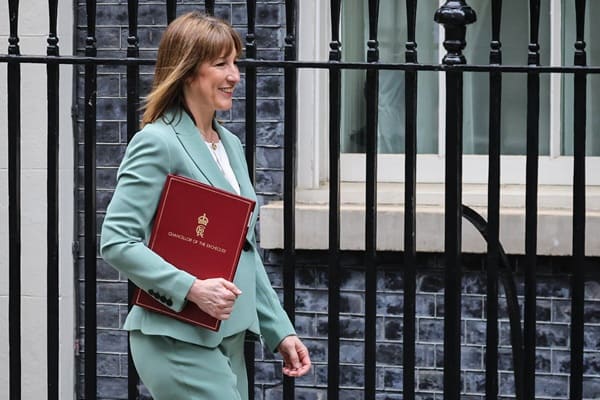
Chancellor Rachel Reeves has emphasised fiscal discipline and credibility as the cornerstone of Labour’s economic strategy.
This positioning initially reduced uncertainty and helped stabilise sentiment. However, markets are now likely to shift their focus from reassurance to outcomes.
“Credibility buys patience, not permanent support,” says Nigel Green. “Once the data stops improving, markets start asking what’s supposed to drive the next phase of growth.”
The implications could become visible across UK assets.
“For Sterling, a labour market that’s losing momentum weakens the relative growth case. Currency markets are comparative by nature, and the pound competes for capital against economies showing clearer acceleration.”
In the gilt market, the data reinforces expectations that underlying growth remains fragile. While easing wage pressure may temper inflation concerns in the short term, it raises longer-term questions about fiscal sustainability.
“Bond investors could already be weighing whether growth will be strong enough to stabilise public finances without additional strain,” says Nigel Green.
“Slower wage growth does not strengthen that case.”
UK equities could face the most direct reassessment. A labour market that fails to tighten limits pricing power and caps margin expansion, particularly for domestically exposed companies.
“Consumer-facing sectors are likely to be most vulnerable, while internationally diversified firms remain relatively insulated.”
Crucially, investors will not view today’s data in isolation. It will be interpreted as part of a broader pattern. With unemployment no longer improving and wage growth easing, the risk is that the UK settles into a low-growth equilibrium rather than building momentum.
The deVere CEO adds: “Markets are highly sensitive to stall points; once improvement plateaus, expectations adjust pretty quickly.
“They also expected progress. At the moment, they’re seeing neither acceleration nor a clear policy catalyst.”
deVere concludes that today’s wage and employment figures could mark a “subtle but important shift” in how the UK is likely to be viewed by global capital. If momentum continues to fade, markets will adjust positioning accordingly.
“When the data stops improving, markets, typically, move on,” he concludes.