The United States is reportedly on the brink of conflict with Iran, with senior officials warning that a confrontation could begin “very soon,” according to Axios, the Washington-based news outlet specialising in insider reporting.
Sources say the White House is preparing for potential large-scale military action if nuclear negotiations with Tehran fail.
Unlike a limited strike, any campaign would likely last weeks and be carried out alongside Israel, targeting Iranian nuclear facilities, missile sites, and critical regime infrastructure.
Military build-up signals readiness
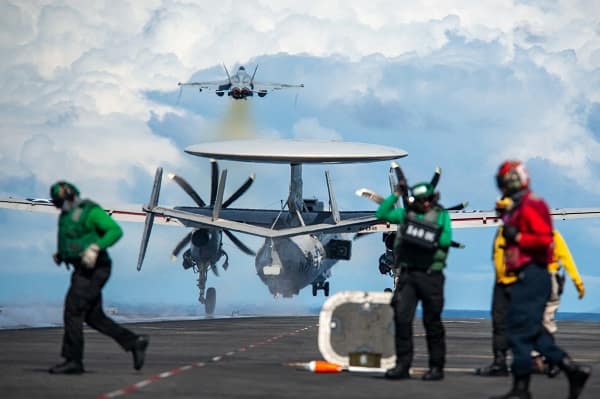
In recent weeks, the US has significantly reinforced its presence in the Middle East. Aircraft carriers and warships have been deployed, hundreds of fighter jets are on standby, and more than 150 cargo flights have delivered weapons and ammunition to regional bases. Officials describe the move as a demonstration of readiness should diplomacy fail.
Despite ongoing negotiations, US officials remain pessimistic about reaching an agreement, with Vice President JD Vance noting that President Donald Trump has set “red lines” that Iran has so far refused to accept.
Earlier this year, the administration held back from attacking, choosing instead a dual approach of diplomacy coupled with a major military build-up. Analysts now warn that with negotiations stalling, military action could be imminent.
High stakes for the region
A potential campaign against Iran carries significant risks. Experts say it could destabilise oil markets, intensify proxy conflicts across the Middle East, and provoke retaliatory attacks. US officials stress that while all options remain on the table, a diplomatic solution is still being pursued.
As tensions mount, analysts warn that the combination of military positioning and stalled talks brings the US and Iran dangerously close to open conflict, with potentially wide-reaching consequences for regional and global security.
Iran has shut down the vital Strait of Hormuz for live-fire naval exercises, marking the first such closure since the 1980s, and has issued a direct threat to American naval forces. The announcement comes amid mounting tensions in the region, as Washington prepares for potential action against Tehran over stalled nuclear negotiations.
The Islamic Revolutionary Guard Corps (IRGC) partially closed the strait—a strategic chokepoint through which roughly 20% of global oil passes—to conduct naval drills northwest of the USS Abraham Lincoln strike group. Meanwhile, the USS Gerald R. Ford is reported to be en route to the region, heightening the risk of confrontation.
Iran’s leadership escalated rhetoric alongside the drills. The country’s Ayatollah warned that American aircraft carriers could be sent to “the bottom of the sea,” signaling Tehran’s willingness to directly challenge US naval power.
A flashpoint in global energy and security
The Strait of Hormuz is one of the world’s most crucial shipping lanes, and even partial closures can disrupt global oil markets. Analysts warn that live-fire exercises in such a confined and strategically important area risk miscalculation, accidental clashes, and potential escalation into full-scale conflict.
“The US President keeps saying ‘our military is the strongest military in the world’… The world’s most powerful military can sometimes receive such a slap that it can no longer stay on its feet,” Ali Khamenei raged.
He continued: “They constantly say, ‘we have sent an aircraft carrier towards Iran’.
“OK, of course an aircraft carrier is a dangerous device, but more dangerous than the carrier is the weapon that can send it to the bottom of the sea.”