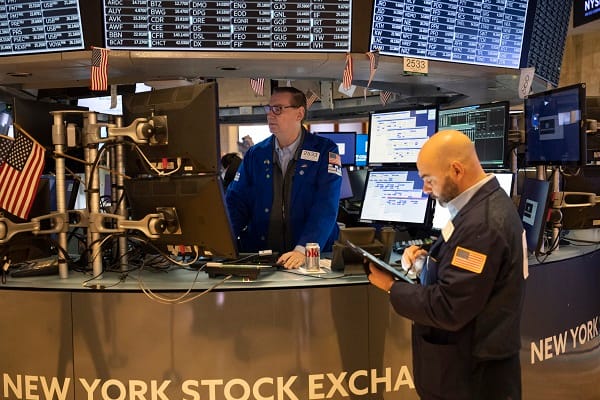
S&P 500 E-mini-Futures rose by 0.75% today, while Nasdaq 100 E-mini-Futures gained more than 1.7%, marking a firm rebound after two weeks of weakness.
US stocks are set to open higher amid improved sentiment heading into the week largely stems from growing expectations that a narrow Senate deal could finally end the 40-day U.S. government shutdown.
The prospect of a reopening is easing some of the uncertainty that has clouded the Fed’s policy outlook and distorted the flow of economic data.
The Senate advanced a measure to fund the government through January after eight Democrats joined Republicans in a 60–40 procedural vote.
The deal offers limited concessions but restores federal workers’ jobs and guarantees back pay. The momentum began to shift when both parties started exploring alternative funding structures, including proposals to redirect healthcare support directly to households. The urgency to end the standoff increased as food assistance programs faced disruption and airport delays intensified.
Broader equity sentiment improved alongside hopes for reopening, particularly as the wealth effect continues to sustain U.S. consumer spending. JPMorgan estimates that roughly 16 percent of consumer spending growth is now driven by stock market gains, especially among the top 20 percent of earners who hold nearly all equities. This has created a split economy in which affluent households maintain robust demand while Americans without stock exposure face their weakest sentiment levels in decades.
With that, markets have become a primary engine for consumption, increasing the economy’s sensitivity to volatility.
Yet strong earnings alone have not been enough to reignite risk-taking. Despite more than 80 percent of S&P 500 companies beating estimates this season, valuations remain stretched after months of AI-driven rallies according to Wall Street Journal.
Investors remain fixated on whether current revenues can justify record multiples, particularly after last week’s sharp selloff in major tech names. Markets are now in a consolidation phase rather than a momentum cycle, with attention turning to the final wave of heavyweight earnings, including Nvidia and Walmart.
Some strategists urge caution despite the renewed optimism. Albert Edwards from Bloomberg argues that the current AI boom carries the hallmarks of a late-1990s-style bubble, fuelled by inflated valuations and deceptively strong earnings buoyed by insufficient recognition of rising borrowing costs. He warns that both profits and valuations are elevated beyond sustainable levels, even if Chinese deflation temporarily supports liquidity. Edwards recommends that investors stay ready to rotate into gold, value stocks, and commodities should sentiment shift abruptly.
Rate expectations are also tempering further enthusiasm. CME FedWatch data shows that the probability of a December 25-basis-point cut has slipped below 63 percent, down sharply from more than 90 percent a month ago. With the shutdown potentially ending, policymakers may feel less urgency to stimulate the economy, driving Treasury yields higher today and creating a modest headwind for growth stocks.