[ad_1]
Smart home technology is often advertised as a universal solution. Purchase a thermostat, connect a meter, and your savings will increase magically. However, things are not that simple. The truth is that the data is generated by the technology itself, and it is your actions based on this data that can lead to a decrease in your bill. This difference is more important than the device you use.
The psychology of visible consumption
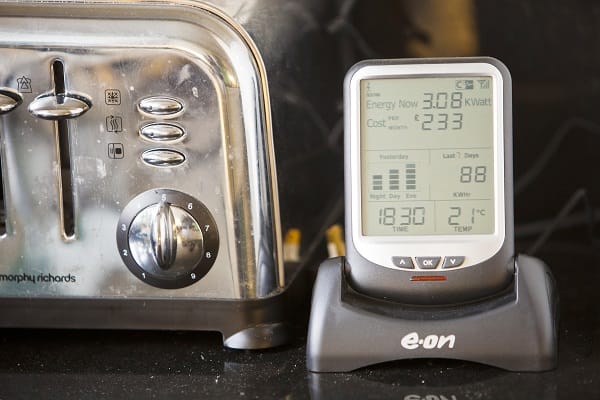
Many families are not aware of how much they are actually spending on their energy usage until they get their utility bill. However, with the help of a smart meter and an in-home display, this could change. For instance, if you can see almost in real time that leaving those two extra lights on will cost you a certain amount of money, you will be more likely to make the decision to turn them off right away.
Research shows that households that combine the use of smart meters with energy efficiency advice save on average 3% of electricity and 2.2% of gas, with even higher savings for those households that also used smart heating.
An overall 3% saving might seem underwhelming, as this relates purely to the impact of providing information before any behavioral aspect techniques or other devices are used. However, these 3% savings represent the minimum potential savings that can be made using a smart meter with an in-home display.
Technology without guidance is half a solution
Here’s what’s missing from the marketing hype: smart technology behaves differently depending on what property you install it in. The perfect thermostat program for a well-insulated modern build is not the same as for an older solid-walled house with higher heat loss. A setting that’s fantastic in one home is wasteful and maybe even uncomfortable in another.
Homeowners who read the information from their smart meter and have no clue what to do with it would benefit from speaking with a professional energy advice line to develop a plan that takes their specific insulation levels, heating system, and construction type into account. The data is only as good as the interpretation.
This problem is particularly acute with retrofit – above and beyond the normal heritage stock issues associated with adding smart controls to houses they weren’t designed for, the technology can work perfectly well, it just needs to be carefully applied.
Heating is where the real savings are
Heating usually represents the largest proportion of your household energy costs. And, heating is where the most waste occurs with older, dumber systems. They heat space you never even use. One timer turns on the boiler and heats every room – including the 2 guest rooms that no one has been in for months – to the same level at the same time.
Smart thermostatic radiator valves enable precise room-by-room control. Your bedroom can be set to dip to 14°C during the day when you’re at work. It’s not freezing, you’re just not needlessly wasting fuel on an unoccupied space. A modulating boiler that tweaks its output up or down, rather than firing up at full whack then shutting off, will also compound savings. If every radiator has its own smart valve, that room will heat when and where you want it.
Add geofencing for even smarter heating. If a thermostat tracks your phone’s location it can tell when you’re on your way home and start warming the house, rather than you having to leave the heating on low all evening just in case you have a late meeting.
Matching usage to cheaper grid periods
Electricity costs can vary dramatically throughout the day. Time-of-use tariffs (often sold under “Agile” or “Green” branding) simply charge you a different rate depending on the momentary demand for power from the grid. Quite often, that means midday or overnight rates significantly lower than the 4-7 PM peak.
Smart appliances will automatically take advantage of this. A dishwasher or washing machine can be programmed to run at 2 AM when rates are low. An electric vehicle charger can be set to draw only during off-peak windows. This isn’t about sacrifice – it’s about running the same tasks at a different time and paying less for them.
The electricity used by devices when they are in standby mode, i.e. when they are turned off, seems harmless but wastes a lot of energy. For example, leaving the TV on standby every night can cost up to £27 a year. Smart Plugs and Smart Hubs can take care of that by turning off devices that are not in use.
Making the data work
Installing smart technology is one thing. But the homes that make the most significant savings aren’t necessarily the fanciest with all the gadgets. They’re the ones where people are most engaged with the data. Where the In-Home Display screen gets checked regularly. Where the tariff gets reviewed and upgraded when a new appliance is fitted. Where heating zones get tweaked to accommodate a change in routine. The tools are good. How you use the tools is what gives you results.
[ad_2]
Source link