[ad_1]
Building an app used to feel like an exclusive club. Unless you knew how to write complex code or had a massive budget to hire a team of developers, your great idea stayed just that—an idea. You might have stared at your phone screen, looking at the apps you use every day, and wondered how you could ever build something similar. The barrier to entry was high, and the process was intimidating.
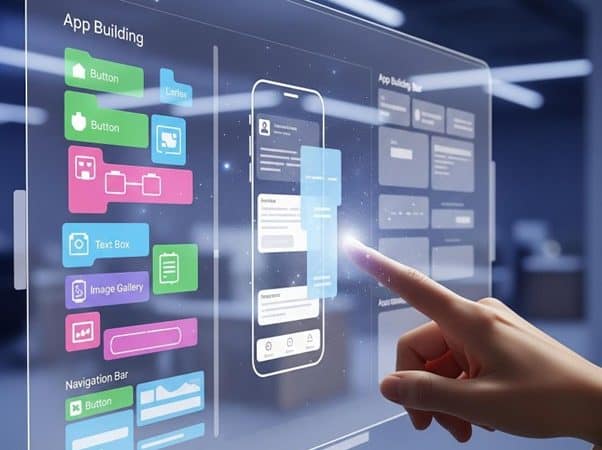
But things have changed. You no longer need to speak the language of computers to build something functional and beautiful. The rise of ai app builder templates has democratised the process, handing the power of creation back to people like you. Using an app design app template acts as a springboard, giving you a solid foundation so you can skip the hard parts and focus on what matters most: your vision.
Using a template does not mean you are cutting corners or settling for less. It means you are being smart with your time and resources. It allows you to bypass the blank page anxiety and start with a structure that already works. Whether you want to launch a fitness tracker, a store, or a community forum, there is a template waiting to help you get there. Let’s look at how you can take a pre-made design and turn it into a fully functioning app that you are proud to call your own.
TL;DR
- App templates empower anyone to create functional apps quickly without coding, accelerating development from months to days.
- By using templates, you can save substantial budget costs, with some templates potentially saving thousands in development time.
- Professional design features in templates enhance user experience, ensuring intuitive navigation and appealing layouts.
- Follow a structured approach when customising templates to avoid pitfalls and maintain professional standards in your app design.
- Remember to focus on core function and consistency to create a seamless user experience and avoid visual clutter.
Why templates are a game changer
When you start a construction project, you usually do not pour the concrete foundation yourself unless you are an expert. You build on top of something solid that is already there. App templates work the same way. They provide the framework, the navigation, and the basic logic, saving you from having to reinvent the wheel.
Speed is your best friend
In the business world, speed matters. If you spend six months trying to build an app from scratch, the market might shift before you even launch. Templates cut that timeline down drastically. Instead of weeks of development, you could have a working prototype in days or even hours. You get to skip the wireframing and basic coding phases entirely. This means you can get your app into the hands of users faster, gather feedback sooner, and improve it while others are still planning their navigation menus.
Save your budget for growth
Custom app development is expensive. You are paying for every hour a developer spends writing code, fixing bugs, and testing features. With a template, a huge chunk of that work is already done. You are essentially getting thousands of dollars worth of development time for a fraction of the cost. This frees up your budget for other important things, like marketing your new app or creating great content to put inside it.
Built-in user experience
Design is hard. Figuring out where a button should go so a thumb can reach it easily is a science. When you use a high-quality template, you are benefiting from the expertise of professional designers who have already solved these problems. They have tested the layouts to ensure they make sense. You do not have to guess if your menu is intuitive because the template creator has already ensured that it is.
Spotlight on Base44 Platform
Not all app builders are the same, and neither are their templates. Depending on what you need, you might gravitate toward different tools. Base44 is a powerhouse if you care deeply about how your app works under the hood. Their templates often come with the heavy lifting already done regarding backend logic. Think of things like databases, user accounts, and data tracking. If you are building a business tool, a directory, or something that needs to manage a lot of information, Base44 templates give you a running start on functionality. They focus on scalability, so as your user base grows, the app grows with it without breaking.
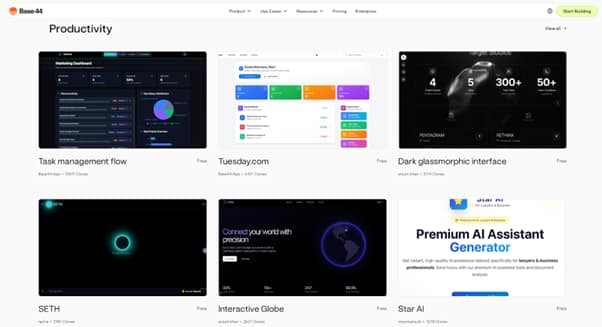
Base 44
Step-by-step: From template to launch
Okay, you are sold on using a template. Now, how do you actually do it? It is easier than you think, but following a process helps keep you organised.
Step 1: Define your goal before you scroll
It is tempting to just dive in and start looking at pretty designs. But before you open a single template, write down exactly what your app needs to do. Do you need users to sign up? Do you need to sell products? Do you need map integration?
If you skip this step, you might pick a template because it looks cool, only to realise later that it lacks the specific features you need. Knowing your requirements helps you filter your options and pick a template that is functionally a good fit, not just visually appealing.
Step 2: Select your foundation
Browse the template libraries of your chosen builder. Don’t just look at the colours or the sample images. Look at the structure. Look at the layout of the pages. Can you see your content fitting into those boxes?
Most builders categorise their templates by industry, like “E-commerce,” “Education,” or “Health.” Start there, but do not feel limited. A template designed for a yoga studio booking app could easily be adapted for a hair salon. Look at the functionality first.
Step 3: Customise the look and feel
This is the fun part. Once you load your template, it is time to make it yours.
- Branding: Swap out the default logo for yours. Change the colour palette to match your brand colours. Most builders allow you to set global colours, so you change it once and it updates everywhere.
- Typography: Change the fonts. Make sure they are readable. A good rule is to use one font for headings and a simpler one for body text.
- Images: Replace the stock photos. This is crucial. Nothing screams “generic” like stock photos that everyone has seen before. Use your own high-quality images to give the app a unique personality.
Step 4: Add your content
Now it’s time to swap the placeholder text with your own words. Keep your text punchy and easy to read. Since people will be reading on a small screen, long paragraphs can be tough to get through. Use bullet points or images to break up text. Make sure every button has a clear call-to-action so users know what happens when they tap it.
Pro-tip: Repurposing content you already have can be a huge time-saver. Think about blog posts, social media updates or product descriptions you’ve already written. With a few tweaks, you can adapt them for your app.
Step 5: Test everything
Before you share your creation with the world, you need to break it. Click every button. Fill out every form. Try to buy a product. Go through every possible action a user could take.
Do this on your computer, but more importantly, do it on your phone. Apps feel different on a touchscreen. You want to make sure the buttons are big enough and the text is legible. If you find a glitch or a confusing path, fix it now while it is easy.
Best practices for customisation
Just because you can change everything does not mean you should. Here are a few tips to keep your app looking professional.
Stick to the grid
Templates are designed with a specific grid or layout structure for a reason. It creates balance. If you start dragging elements randomly around the screen, you might disrupt that balance. Trust the original layout and try to work within it.
Less is more
It is tempting to add every feature the builder offers just because it is there. Resist that urge. A cluttered app is a confusing app. Focus on the main thing you want your user to do and remove anything that distracts from that. If a feature does not serve your primary goal, cut it.
Consistent navigation
Do not get too creative with how people move around your app. Users expect a menu at the bottom or top. They expect a back button in the top left corner. If you move these things to unusual places, you will frustrate your users. Stick to standard navigation patterns.
Common mistakes to avoid
Even with a template, things can go sideways if you aren’t careful. Watch out for these pitfalls.
Ignoring Mobile Responsiveness
You are building an app, so obviously it needs to look good on mobile. But sometimes when you are editing on a large desktop monitor, you forget to check the mobile view. You might create a layout that looks amazing on a wide screen but is completely squashed on a phone. Check the mobile preview constantly.
Inconsistent Styling
Make sure your buttons all look the same. Make sure your headings are all the same size. If one page uses round buttons and the next page uses square ones, the app will feel disjointed. Consistency makes your app feel polished and trustworthy.
Overloading with High-Res Images
We said you should use high-quality images, and you should. But you also need to optimise them. If you upload massive file sizes, your app will load slowly. People are impatient. If your app takes ten seconds to load because of a huge background image, they will close it and never come back. Use tools to compress your images before you upload them.
Launching your vision
Once you have customised your template, tested the functionality, and polished the design, you are ready to launch. This is a huge milestone. You have taken an idea and turned it into a tangible product without writing a single line of code.
Using an app builder template is about empowering yourself. It removes the technical hurdles that used to stop people from creating. It allows you to focus on your business, your community, or your passion project. You do not need a computer science degree to build something great. You just need a good idea, a solid template, and the willingness to jump in and start creating.
So go ahead. Browse the templates. Find the one that speaks to you. Your app is waiting to be built, and now you have the tools to make it happen faster than you ever thought possible.
FAQ
What are app templates and how do they work?
App templates are pre-designed frameworks that simplify the app creation process by providing a structured layout, navigation, and functionality. They allow users to focus on customising the appearance and content of the app, rather than starting from scratch, which can save time and reduce the complexity of app development.
How can using an app template save me time and money?
Using an app template significantly reduces the development time from months to days or even hours since many base functionalities are already built-in. This minimises the need for extensive coding and debugging, allowing you to redirect your budget towards marketing or content creation instead of costly development hours.
What should I consider before choosing an app template?
Before selecting an app template, it’s crucial to define your app’s goals and specific functionalities. Consider what features you need, such as user sign-up, product sales, or map integration. This helps you filter templates that not only look good but also serve the intended purpose effectively.
What are some common mistakes to avoid when customising an app template?
Key mistakes to avoid include ignoring mobile responsiveness, which can result in a layout that looks good on desktop but not on mobile, and inconsistent styling, which can make your app feel disjointed. It’s also essential to avoid overloading with high-resolution images that slow down loading times.
What are some best practices for customising app templates?
Best practices for customising app templates include sticking to the established grid layout to maintain visual balance, focusing on minimalism by avoiding clutter, ensuring consistent navigation throughout the app, and regularly checking both desktop and mobile views to maintain user experience across devices.
[ad_2]
Source link