[ad_1]
Modern industries work with materials that demand extreme accuracy. Even small mistakes can cause a part to fail, a product to weaken, or an entire batch to go to waste. High-tolerance materials are used in aerospace parts, automotive components, medical tools, electronics, and advanced machinery. These products must meet strict specifications, and the cutting method plays a major role in their performance.
The challenge is simple: the wrong cutting method can create heat damage, cracked edges, rough surfaces, or warped shapes. This leads to higher costs and weaker results. That is why companies take time to study material behaviour, precision needs, production volume, and long-term performance before choosing a technique.
In this article, you’ll learn what high tolerance means, the factors businesses compare, and how different cutting methods support accuracy.
Key factors businesses evaluate before choosing a cutting method
Choosing the right cutting method begins with understanding how the material behaves and what the project requires. Each material responds differently, so companies must review a few important factors before deciding.
Key points include:
- Material sensitivity: Some metals handle heat well, while plastics and composites may warp or crack.
- Precision needs: Industries that need tight tolerances require smoother edges and accurate shapes.
- Heat impact: Heat can distort materials, so cold-cutting methods work better for delicate surfaces.
- Production speed: High-volume projects need a method that balances accuracy with efficiency.
- Cost and waste: Some methods reduce scrap and tool wear, while others require lower upfront investment.
Balancing these elements helps businesses protect quality while staying efficient.
Comparing common cutting methods for high-tolerance materials
Businesses compare several cutting methods before choosing the right one for high-tolerance materials. Each method works differently and offers its own benefits and limitations.
Below are the most common cutting methods used for tight-tolerance projects and how they perform in real industrial settings.
1. Water jet cutting
Many companies choose cold-cutting methods like water jet cutting because they protect materials from heat and distortion. This process uses a powerful stream of water, sometimes mixed with abrasive particles, to cut metals, stone, plastics, composites, and other sensitive materials with high accuracy. Providers such as OMAX Corp, a Hypertherm Company, design systems that create smooth edges, precise shapes, and clean finishes without burning, melting, or warping the surface.
Key strengths include:
- No heat-affected zones
- Very smooth edges
- Ability to cut thick or fragile materials
- High precision and minimal waste
These advantages make water-based cutting a strong choice for industries that work with tight tolerances or delicate materials.
2. Laser cutting
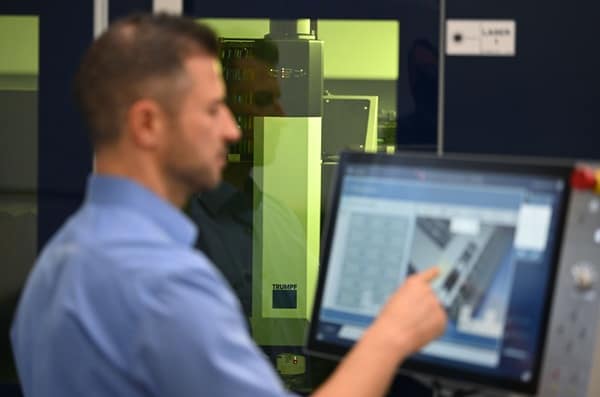
Laser cutting is popular for thin metals and detailed shapes because it offers speed and fine control. A focused laser beam melts or vaporizes material along a narrow line, creating clean edges and sharp curves. This makes it useful for electronics, signage, sheet metal parts, and lightweight components.
However, the laser generates heat, which can be a limitation. Sensitive materials may warp, discolour, or weaken during cutting. Thicker materials can also be harder to process because the laser may lose precision or struggle to maintain uniform depth.
While laser cutting is fast and efficient, it is not ideal for projects that require tight tolerances on heat-sensitive surfaces.
3. CNC machining
CNC machining offers high precision for complex shapes, drilled holes, tight angles, and detailed 3D features. It works well with metals, plastics, and rigid materials because the cutting tools follow a programmed path with consistent accuracy.
Many industries choose CNC machining when designs require exact measurements or custom shapes. However, the method can be slower than other cutting processes. It also removes material through cutting, which produces chips that must be cleared during production.
Tool wear is another factor—hard materials or intricate designs can cause tools to dull faster, increasing maintenance costs. Despite these limits, CNC machining is valued for its reliability and ability to produce tight tolerances.
4. Plasma cutting
Plasma cutting is often used for thick metals, especially in construction, fabrication, and heavy equipment manufacturing. A hot, electrically charged plasma arc cuts through the material quickly, making the method efficient for large projects or rough shaping. It handles steel and other conductive metals well and works at high speeds, which reduces production time.
However, the strong heat from the plasma can affect edge quality. Materials may warp, show burn marks, or require additional finishing. Because of the heat involved, plasma cutting is not the best choice for tight-tolerance projects or delicate surfaces.
It is most effective when speed matters more than precision, and materials can withstand high temperatures.
These methods show that no single cutting process fits every project. Each technique works best under specific conditions, depending on the material, accuracy needs, and production goals.
How businesses match cutting technology with project needs
Choosing a cutting method is a careful process. Businesses compare several points before making a decision:
- They study the material and how it reacts to heat or pressure
- They test sample cuts to check surface quality
- They measure accuracy to confirm tolerance levels
- They look at production time and overall cost
- They consider long-term goals, such as durability or repeatability
- They evaluate which method reduces waste and improves consistency
This approach helps companies protect product quality while staying efficient.
Conclusion
Working with high-tolerance materials requires the right cutting method. Each process has strengths and limitations, and the best choice depends on material behaviour, precision needs, production volume, and cost factors. By comparing these elements carefully, businesses find methods that protect material quality and maintain tight measurements.
A reliable cutting approach helps companies reduce waste, improve performance, and meet industry standards with confidence.
[ad_2]
Source link