In a week that has seen yet another Russian-aligned regime unravel, the United States launched a slick, well-planned operation in Venezuela, whatever one’s view on the ethics, removing President Maduro from power.
At the same time, Iran is once again sparking with unrest that could rid the country of the autocratic extremism Moscow chose to align itself with.
Taken together, these developments mark a shift in the global balance that the Kremlin has never truly faced before.
This comes after Bashar al-Assad fled Syria, Russian forces withdrew amid growing uncertainty, and Moscow effectively lost its only warm-water naval facility at Tartus, a strategic foothold it had spent a decade securing.
Both Venezuela and Iran openly supported Russia’s invasion of Ukraine. Both were held up by the Kremlin as evidence that Russia was not isolated, that an alternative bloc to Western power was forming. Today, both look unstable, distracted, or in danger of collapse altogether with Venezuela also an aspiring BRICS member sitting atop the world’s largest proven oil reserves.
As I raised in my recent podcast The Power Shift:
Vladimir Putin has never experienced pressure like this. Not economically. Not militarily. Not diplomatically. Russia is bogged down in Donbas after more than eleven years of war. The imperial “three-day operation” fantasy is long dead. Sanctions and war costs are grinding down the economy. Allies have shifted from assets to liabilities. Stealth and forced mobilisation have met rising public apathy, while propaganda is growing louder precisely because reality has grown worse while for the first time in decades, voices inside Russia are beginning, quietly and cautiously, to question the direction of travel.
It is against this backdrop that one word has returned to the centre of Kremlin messaging:
Russophobia
A word designed to end debate
“Russophobia” has become the Kremlin’s most versatile buzzword. It is deployed whenever Russia is criticised, sanctioned, isolated, or held to account. It is not used to describe genuine hatred or prejudice against Russian people generally. It is used to shut down argument and it is one of several rhetorical weapons we will hear with increasing frequency as pressure on the Kremlin intensifies.
Support Ukraine? Russophobic. The false claim that the Russian language is banned in Ukraine? Russophobic. Question mobilisation, corruption, sanctions, or casualty figures? Russophobic.
The term has been deliberately stripped of meaning and refilled with political utility. In modern Kremlin usage, Russophobia does not mean hostility toward Russians. It means opposition to Kremlin power, full stop.
That distinction is crucial, and it is intentionally blurred.
This is why recent events beyond Ukraine matter so deeply to Moscow’s narrative. When Donald Trump authorised military action in Venezuela without congressional approval, Russia did not need to invent a new argument it was handed one. The Kremlin will use this precedent to justify its own invasion of Ukraine, reinforcing a long-standing propaganda line: if America can do it, why can’t Russia?
Russophobia is reintroduced not as explanation, but as distraction. Criticism of Russian aggression is reframed as selective outrage. Accountability is recast as hypocrisy. The illegal invasion of a sovereign neighbour is reduced to a crude geopolitical tit-for-tat.
Washington may not have legitimised Russia’s actions in law, but it has undeniably fed into the narrative Moscow relies on most: that rules only matter when they are enforced against Russia, and that opposition to its behaviour is driven not by principle, but by prejudice.
For a Kremlin already under strain, that narrative is not just convenient, it is essential.
From defensive shield to offensive weapon
In the post–Cold War period, accusations of Russophobia were largely defensive, used to frame NATO expansion or European Union criticism as cultural hostility. Today, the term has evolved into something far more aggressive, an offensive political weapon.
Ukraine’s resistance is framed as Russophobic nationalism, or more crudely as “Nazism”, a label deployed deliberately to strip Ukrainians of legitimacy and justify violence.
Sanctions are framed as Russophobic punishment of ordinary Russians.
Energy diversification is framed as Russophobic economic warfare.
This framing allows the Kremlin to avoid engaging with facts and replace accountability with grievance by positioning itself as the perpetual victim, Russia reframes scrutiny as persecution.
This tactic is not unique to states. It is a familiar pattern in any system seeking to evade responsibility: claim victimhood loudly enough and accountability becomes harder to enforce. If Russia is always the victim, then Russia is never responsible, not for invasion, not for occupation, and not for the consequences of its own decisions, including the war crimes it has committed.
In this context, Russophobia is not a defence of people or culture. It is a shield against consequence, sharpened into a sword against criticism.
When slogans meet reality
Propaganda works best when reality cooperates. Right now, it does not.
Russia is no longer projecting confidence; it is managing decline. The war in Ukraine has become an attritional drain on manpower, finances, and legitimacy. Moscow has been caught openly falsifying military achievements in full public view, from claims around Pokrovsk to repeated misrepresentations in Kupiansk. While precise figures remain obscured, the consequences are unmistakable. Mobilisation notices arrive. Funerals take place. Regional budgets shrink & living standards fall.
Compounding this pressure, the United States has demonstrated, through its own rapid military operation, a stark contrast to Russia’s much-vaunted “special military operation.” What Moscow claimed would take days has stretched into a fourth year of war, with an estimated 1.2 million Russian casualties and a strategic position worse than when the full-scale invasion began in 2022. That comparison is not lost on audiences, either at home or abroad.
The louder the Kremlin shouts about Russophobia, the clearer the pressure becomes.
Sanctions are no longer abstract threats; they are structural constraints. Defence spending is cannibalising civilian life. Entire industries now survive only through state subsidy. Regional inequality deepens as Moscow prioritises sustaining the war above all else, hollowing out local economies to feed the centre.
After nearly four years of fighting, Russia is no longer merely strained, it is visibly struggling.
Allies becoming liabilities
For more than a decade, Moscow aligned itself with autocratic regimes willing to trade legitimacy for protection. It was a cynical but internally coherent strategy, until those regimes began to wobble.
When partners face unrest, regime change, or external pressure, Russia lacks the capacity to intervene everywhere at once. This was laid bare in Venezuela, where Moscow had extended security guarantees that evaporated the moment the United States crossed the border. Nor can Russia offer meaningful economic lifelines when its own economy is under sustained strain.
The idea of a stable “anti-Western axis” collapses quickly when tested by real-world shocks and those stresses are already visible early into 2026.
Each faltering ally punctures the myth of inevitability the Kremlin relies upon: the notion that history itself is moving inexorably in Moscow’s favour. That sense of momentum of being on the “right side” of global power shifts, has long underpinned Russian foreign-policy messaging. When all that fades, propaganda compensates, but increasingly, that compensation is failing.
What was once Putin’s greatest weapon narrative, dominance built on confidence and inevitability, has become a double-edged sword. The louder the claims of strength, the more visible the underlying weakness becomes.
Why Russophobia is so useful
The accusation of Russophobia serves three immediate purposes for the Kremlin.
First, it delegitimises critics by portraying them as irrational, prejudiced, or motivated by hatred rather than principle. Second, it reinforces a siege mentality at home, uniting the population against a supposedly hostile external world, Europe, NATO, and the West more broadly. Third, it deflects attention away from policy failure and redirects it toward identity.
But this tactic comes at a cost.
By insisting the world hates Russia simply for being Russia, the Kremlin denies its own citizens agency. Reform becomes pointless, compromise impossible & change is futile. Hostility is framed as permanent and unavoidable.
That is why internal critics are treated not as dissenters but as traitors. They do not merely question policy; they threaten the siege narrative itself. In a system built on perpetual confrontation, questioning the narrative is treated as a greater danger than failure on the battlefield or in the economy. This is Russia Today.
The danger of apathy
What Russia faces now is not mass uprising, but something far more corrosive to an authoritarian system: apathy turning into doubt.
Mobilisation without victory breeds resentment.
Sacrifice without explanation breeds cynicism.
Propaganda without progress breeds disbelief.
State television still dominates, but lived experience is harder to suppress. Soldiers return. Families compare notes. Economic reality seeps through even the thickest layers of censorship.
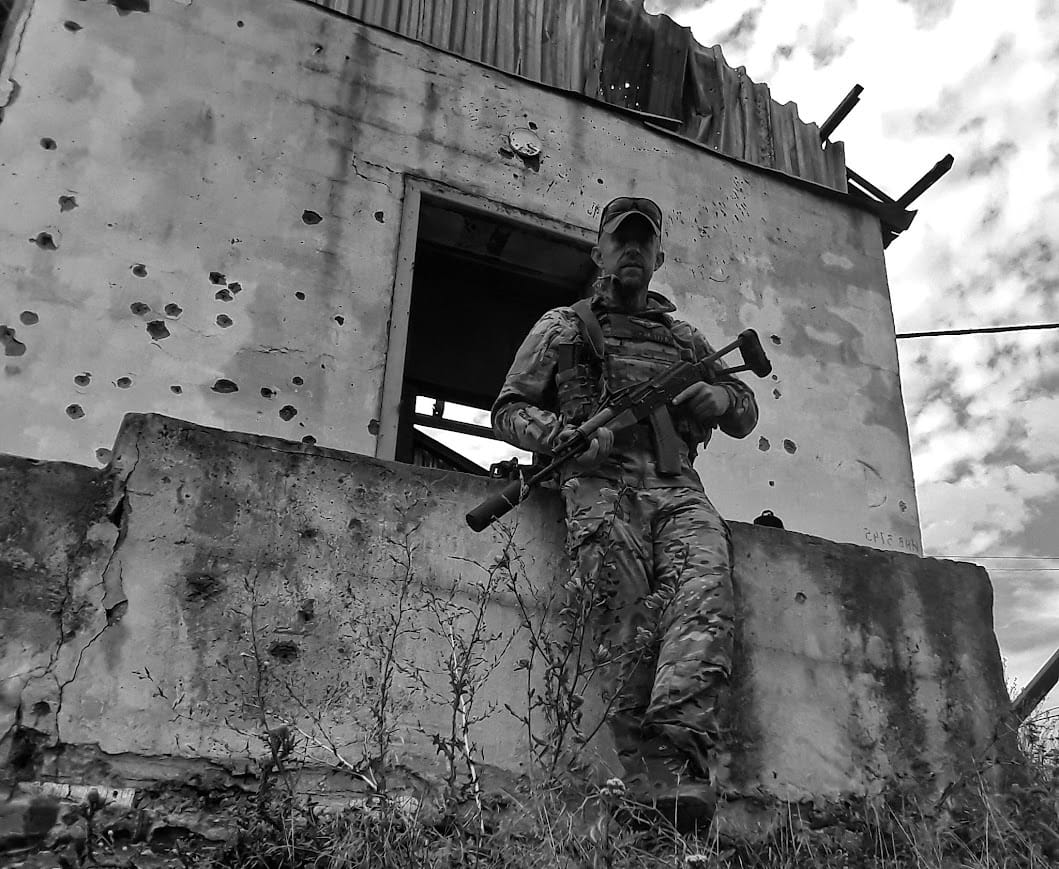
I can speak to this from experience. I was taken from my city and my country by an invading force, subjected to abuse, tried in the court of public opinion, and sentenced to death by a sham judicial system. I was branded a “Nazi,” a “mercenary,” and a “terrorist” charges that would not stand in any credible court anywhere in the world. Inside the prison system, even among the general population, people understood how distorted Russian media reporting was. They complained about it openly. They knew the truth was being bent.
Today, that distortion is far worse, and far more visible.
When personal experience consistently contradicts state narratives, belief erodes. At that point, accusations of Russophobia stop persuading and start sounding desperate. What once functioned as a rallying cry becomes a tell, a signal not of strength, but of insecurity.
In systems built on fear and control, doubt is often more dangerous than open dissent.
This was never about hatred
Opposing the Kremlin is not opposing Russia. Supporting Ukraine is not hating Russians. Demanding accountability for invasion, deportations, and war crimes is not cultural prejudice.
The Kremlin needs those lines blurred because clarity is dangerous. It openly threatens nuclear escalation, sabotages undersea infrastructure, and wages information warfare as standard policy. Russia is on a war footing, whether Europe is prepared to admit it or not.
The real fear in Moscow now is not Western hostility. It is Russian awareness, awareness that the imperial dream is dead, that the cost has been one-sided, and that power has been spent for nothing tangible in return.
Russophobia is shouted loudest when belief is fading.
And belief, increasingly, is fading fast.
While Russia itself, made me Russiaphobic.