[ad_1]
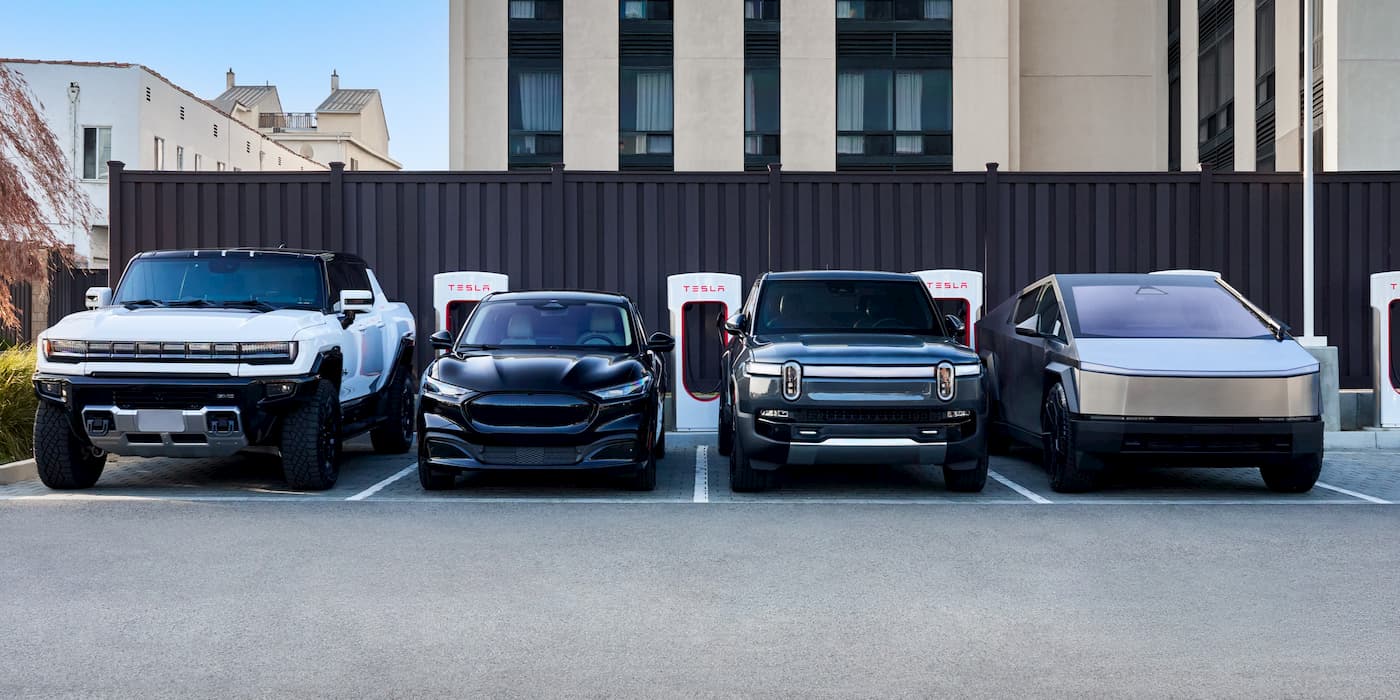
Tesla, Rivian, and other EV automakers in the US are seeing billions of dollars in revenue disappear as the US is officially ending the emission credit market.
As we previously reported, Trump’s recently passed ‘Big Beautiful Bill’ is expected to have numerous impacts on the EV sector in the US.
The main one is the removal of the federal tax credit for the purchase of electric vehicles on September 30th.
Another change is the end of penalty enforcement for automakers with lower average fuel economy – aka those that produce more gas-guzzling vehicles and fewer electric vehicles.
This change is now already entirely in effect.
The National Highway Traffic Safety Administration (NHTSA) has officially stopped issuing compliance letters to automakers for violating fuel economy standards. This eliminates the market for credits under the Corporate Average Fuel Economy (CAFE) standard.
Automakers that didn’t comply with CAFE rules had to pay fines or purchase credits from other automakers that had a surplus, primarily those that only sell electric vehicles, such as Tesla, Rivian, and Lucid.
Those automakers would sell the credits for less than the fines, but now that the Trump administration has officially eliminated the penalties, it has officially killed the market for credits.
Many automakers had deals to purchase the credits, and following the passing of the ‘Big Beautiful Bill’, it wasn’t clear if those deals would continue or if
The Zero Emission Transportation Association (ZETA), an EV trade group, filed a petition in the U.S. Court of Appeals to force NHTSA to resume issuing the letters.
In comments attached to the petition, Christopher Nevers, Rivian’s director of public policy, stated that the company is unable to finalize its credit deals due to the NHTSA’s decision to end the issuance of compliance letters, resulting in a loss of $100 million in revenue.
Rivian no longer expects any CAFE credit revenue this year.
A NHTSA spokesperson claimed that it will return to issuing compliance letters after a review of the CAFE standards (via investing.com):
“NHTSA is focusing on fixing CAFE standards to make cars more affordable again. When that process is complete, we will return to issuing compliance letters to manufacturers.”
But there’s significant doubt that this will happen under the Trump administration.
Ironically, the automaker most affected by this change is Tesla, whose CEO donated hundreds of millions to Trump’s campaign.
Over the last four quarters, Tesla reported almost $2.5 billion in revenue from regulatory credits, which accounted for a significant portion of its net income during the period.
Those are global regulatory credit revenues, and the automaker doesn’t disclose what part comes from the US, but it is estimated that as much as half comes from its US sales.
Electrek’s Take
It’s a sad day. This was a direct transfer of money from companies that contribute to deadly pollution to companies that try to reduce that pollution.
It was undeniably a good thing, and we are now already seeing automakers slow down their electric vehicle plans in the US.
Yesterday, I asked Honda executives what they think are the main reasons for the slow adoption of electric vehicles in the US, and their response was emphatic: “policies”.
It’s not just the actual policies, but the uncertainty and constant changes that make it hard to deploy a clear strategy.
In my opinion, EVs are the superior product, and automakers should strive to deliver the best product possible. However, corporations have different objectives, and I understand that these policy changes make it challenging to operate.
The result is that the US will fall further behind in electric vehicles while the world moves forward at full speed.
FTC: We use income earning auto affiliate links. More.
[ad_2]
Source link