[ad_1]
Game top-ups have developed to be no longer a casual purchase, but a strategic weapon of professionals who want to be efficient. Gaming has ceased to be a hobby of teens today. It has become a high-tech sector of the global digital economy, which brings in billions of dollars a year. Having something like Genshin Impact and PUBG Mobile that are ruling the entire world, players want to know how they can optimise their in-game progress at the expense of their personal or professional life. This trend is indicative of a larger change in consumer behaviour in which efficiency and convenience are the key drivers in making spending decisions.
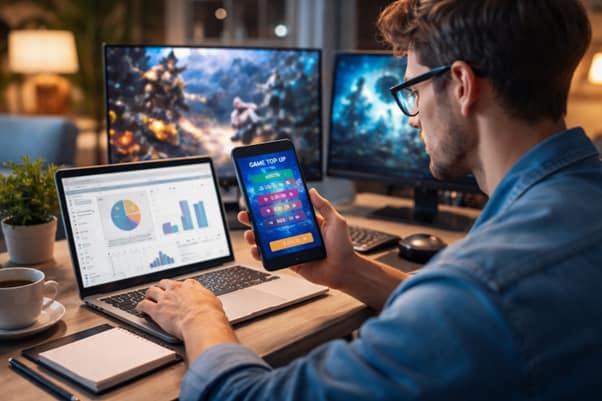
The dilemma of time poverty is experienced by modern consumers, especially those who are of high net worth and busy people. They most likely have expendable income to spend on a high-quality gaming experience, though they frequently simply do not have 40+ hours a week to grind the rewards. In this case, the game top-ups will be an effective solution, and a player can continue to avoid repetitive actions and pay attention to fun and tactics. The professionalisation of the play shows the way digital leisure is becoming more aligned with the lifestyle requirements of the consumer that focus on convenience without affecting the gaming experience.
Gaming Efficiency as a Service (EaaS).
EaaS is a radical change in the way digital goods are viewed. Similar to the example of Uber that saves time in commuting and meal delivery that saves time in cooking, game top-ups save hours that otherwise would be spent in the same gameplay. Economically, assuming that a professional can place an hour of his/her time at 100 Sterling Pounds, 10 hours of grinding to earn digital assets would be a huge opportunity cost. Buying a top-up would then be a rational choice. When players purchase something virtual, they are purchasing time, which is usually more precious than money itself.
The trust factor: Reaching the virtual marketplace
Since digital assets are increasingly getting monetary and emotional values, security and speed are becoming commodities. The priority of players is a site that can assure them of account security, flawless transactions, and real-time delivery. Even more trust is established when platforms are characterised by clear pricing, professional customer support, and stable API integrations. The need to keep a competitive advantage and, at the same time, a high level of security is forcing players to use specialised game top-up portals that act as the mediator between international payment systems and immediate in-game utility. Those platforms that do not match these requirements threaten to lose their market share to more effective, reliable services.
The internationalisation of mobile economies
The gaming market in the world is in continuous growth, and notably, mobile titles are at the top. Genshin Impact and Delta Force are two examples that have reported the highest revenues ever, and this shows how digital economies defy borders. Game top-ups allow international gamers to take part in these virtual economies in full without having to wait until the local currency converts or make a sluggish trip to the bank. The internationalisation of digital currency has developed a common language of gaming payment, which needs fintech solutions that can complete cross-border payments, SWIFT payments, and manage digital assets. This tendency indicates the fact that gaming is not a local leisure activity anymore but a globally interconnected economy.
The psychological worth of online productivity
On top of financial efficiency, game top-ups also offer a psychological desire to get immediate rewards and control. For example, when you top up PUBG Mobile, you get UC to unlock rare, event-specific cosmetics & items. There will be no frustration or slow development of professionals.
Rather, they have instant access to a higher-level gameplay, which increases satisfaction and engagement. The need to have time-saving services points to a paradigm shift: nowadays, consumers do not simply attach value to the products but to the effectiveness and quality of experience. Consequently, platforms that provide their users with reliable and secure top-ups, as well as those that ensure this feature is safe, will end up with a loyal following of people who view the service as part of the gaming experience.
Economic and social implications of the efficiency economy
Efficiency-based gaming services have more widespread economic and social consequences. It emphasises the way consumers are changing their attitude to leisure by putting convenience and time savings as a priority instead of traditional value measures such as cost or rarity. Otherwise, socially, these platforms enable players to engage in competition with other players who might have more free time, and this provides a level playing field, thereby recreating the concept of fairness in virtual spaces. Thus, the efficient economy not only has an impact on individual behaviour but also affects the market dynamics in the global gaming industry.
The future of virtual experiences in a rapid world
In the future, the incorporation of efficiency services in the field of gaming is bound to intensify. With the development of the metaverse, virtual reality, and in-game economy, the need to find a solution that is fast, secure, and globally compatible will only grow. The market will be dominated by platforms that integrate technology innovation and customer-centric services. Contemporary consumers do not desire digital products anymore; they are expecting smooth experiences, immediate outcomes, and strategic benefit. A good example of this evolution can be seen in game top-ups, which combine the lack of time with disposable income.
FAQs
Q1: What are game top-ups, and what is their significance?
Game top-ups are online purchases where the player can get in-game currency or items immediately. They are time-saving and offer a better and more effective game experience, especially to fast-paced professionals.
Q2: Do high-value accounts play it safe with game top-ups?
Yes, reputable websites use the most effective security protocols, such as API integrations, encrypted payments, and authorised payment systems, and digital items are safe.
Q3: What is the effect of game top-ups on the economy of global gaming?
They generate more income for developers, facilitate international transactions, and also provide a platform through which players all over the world are able to equally play in the virtual economies.
Q4: Are game top-ups used to substitute the traditional gameplay?
Not entirely. They complement the conventional play, and users will save time, but they do not miss the immersive and strategic experience of the games.
Q5: Can the professionals have economic benefits from game top-ups?
Absolutely. They minimise opportunity costs by enabling players with high incomes to spend their time productively, and at the same time receive high-quality gameplay.
Conclusion
The economy of efficiency is making gaming a recreational activity a complex combination of time, money, and experience. The use of game top-ups is a good example of this transformation because it gives players, especially busy people, the chance to spend as much time as possible gaming without wasting their time. With the worldwide gaming industry ever expanding, efficiency-oriented digital services will make the era of consumer value characterise the next generation of convenience, security, and fun under one, uninterrupted experience. Gaming nowadays is not a matter of how many hours you spend having fun, but how smart you are.
[ad_2]
Source link