[ad_1]
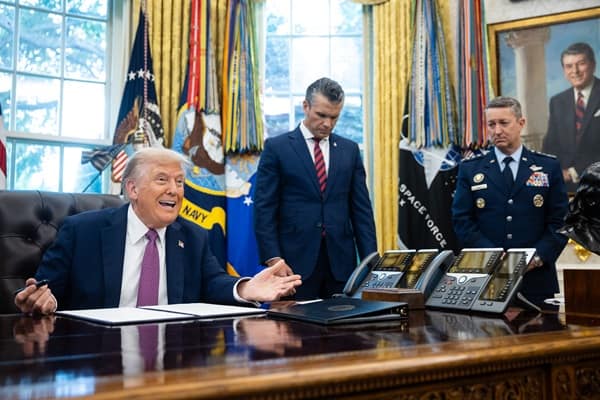
During a recent conference in Tennessee, former President Donald Trump appeared to redirect responsibility for the idea of military action against Iran to his Secretary of War, Pete Hegseth.
Trump indicated that Hegseth was the first to advocate for a strike, citing Iran’s escalating nuclear ambitions and its longstanding reputation as a “purveyor of terror.”
This shift in blame raises questions about the internal dynamics of foreign policy decision-making within Trump’s administration.
These comments were made against the backdrop of the fourth week of U.S. military operations against Iran.
The campaign commenced on February 28, when a series of coordinated missile strikes resulted in the deaths of Iran’s Supreme Leader and several other high-ranking officials within the regime.
The military actions targeted critical infrastructure, aiming to weaken Iran’s capacity to project power in the region. Despite these aggressive tactics, the Iranian government has managed to maintain its grip on power and has responded to the strikes with its own missile and drone attacks. This retaliation has targeted Gulf states, leading to significant disruptions in shipping lanes and raising concerns about regional security.
In a twist that surprised many observers, markets reacted positively to Trump’s hints suggesting a potential de-escalation of hostilities.
He claimed that diplomatic talks were underway and expressed confidence that Iran “wants peace” and had supposedly agreed to halt its pursuit of nuclear weapons. However, Iranian officials have categorically rejected these assertions, insisting that no negotiations are taking place and reiterating their commitment to their existing policies.
Furthermore, Trump has delayed the deadline for Iran to reopen the vital Strait of Hormuz, warning that failure to do so could lead to targeted airstrikes on Iranian power stations if shipping through the strait is obstructed.
This strategically significant waterway is crucial for global oil transportation, and any military action could have far-reaching consequences. Overnight reports indicated that missiles were launched from Iranian territory directed at Israel, Bahrain, Kuwait, and Saudi Arabia, underscoring the escalating volatility and complexity of the conflict in the region.
[ad_2]
Source link